
Most warehouse injuries do not come from the dramatic accident everyone trains for. They come from the box lifted from the bottom pallet for the 400th time today, from the second week of a heatwave under a metal roof, from a trailer that inches away from the dock while someone is still inside it, and from a rack upright that was dented months ago and never reported.
Warehousing is now one of the largest employers in logistics. In the United States alone, about 1.8 million people work in warehousing and storage (U.S. Bureau of Labor Statistics [BLS], n.d.). Their injury rate is more than double the private-industry average, and the gap is even wider for injuries serious enough to keep someone off their normal job (BLS, 2025). Regulators have noticed: OSHA's national emphasis programme on warehousing and distribution centres, first launched in 2023, was revised and extended in July 2026 for another five years, covering vehicles, material storage, walking surfaces, exits, fire protection, heat and ergonomics (OSHA, 2026b). Forklifts get most of the attention, and they deserve it, but a separate BLTI article covers them in depth. This guide is about everything else.
We checked government data, safety standards, regulator guidance and peer-reviewed research to collect 25 hazards that hide in plain sight in warehouses and distribution centres. Each one comes with the evidence, an APA citation you can check, and three practical steps leaders can take this month.
The short version: The biggest warehouse risks are ordinary: repetitive lifting, pace pressure, heat, new workers, damaged racking, loading docks, slippery floors and injuries that never get reported. They are predictable, which means they are preventable, but only if leaders design the work, not just remind people to "be careful".
Key takeaways
- Warehouse work is more than twice as risky as average. In 2024, U.S. warehousing and storage recorded 4.8 injuries and illnesses per 100 full-time workers, against 2.3 for all private industry (BLS, 2025).
- Restricted duty is where injuries hide. The warehousing rate for cases involving job transfer or restriction was 2.6 per 100 workers, more than five times the private-industry rate of 0.5 (BLS, 2025).
- Lifting training alone does not prevent back pain. A Cochrane review of nine randomised trials with 20,101 employees found no preventive effect of manual handling training (Verbeek et al., 2011).
- The first days in the heat are the deadliest. In OSHA heat cases from 2012–2013, nine of 13 deaths happened in a worker's first three days on the job, four of them on day one (Arbury et al., 2014).
- New workers are the most exposed. People in their first month on a job were more than four times as likely to have a lost-time injury claim as people with over a year in the role (Breslin & Smith, 2006).
- Most injuries never reach the official count. One Michigan study estimated the national surveillance system missed up to 68% of work-related injuries and illnesses (Rosenman et al., 2006).
How to read this guide: The 25 hazards are grouped into four parts: the body, the environment, structures and machines, and the floor and the system around it. Citations in brackets lead to the full reference list at the bottom. U.S. rules are cited most often because their data is the most detailed, but the hazards are universal. This article is general information, not legal, medical or engineering advice. Check the regulations where you operate and use competent engineers and occupational health professionals for site-specific decisions.
Part 1: The body under pressure: lifting, reaching and pace
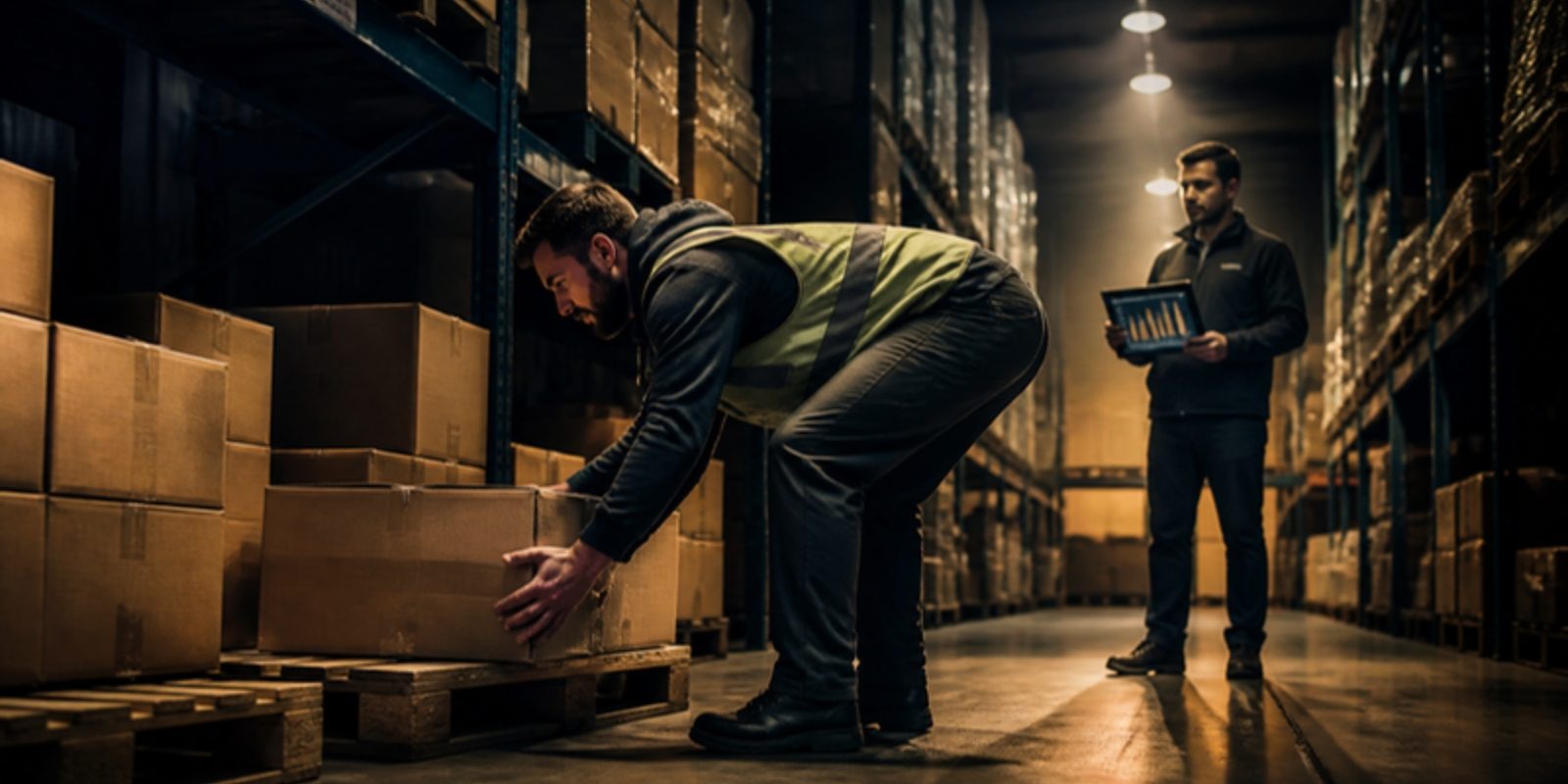
Hazard 1: Boxes that are light enough to lift once, but not 400 times
Most people judge a lift by the weight of the box. Ergonomists judge it by the whole task. The Revised NIOSH Lifting Equation starts from a "load constant" of 23 kg (51 lb) for a perfect lift, then reduces it for every real-world penalty: distance from the body, height, twisting, poor grip and how often the lift is repeated (Waters et al., 1993; Waters et al., 1994). Dividing the actual weight by that recommended limit gives a Lifting Index. In a combined study of 677 workers in 125 lifting jobs, the odds of low back pain were 1.81 times higher for jobs with an index between 1 and 2, and 2.26 times higher for jobs between 2 and 3 (Waters et al., 2011). Across U.S. private industry, overexertion and bodily reaction caused more serious injury cases than any other event in 2021–2022, about 1,001,440 cases involving time away, restriction or transfer. Among transportation and material moving occupations, it was the leading cause, with a median of 21 days away from work (BLS, 2023).
What leaders should do:
- Run the NIOSH lifting equation, or have an ergonomist run it, on your ten highest-volume picks and redesign any task with an index above 1.
- Track lifts per shift, not just units per hour. Frequency is part of the weight.
- Use lift assists, vacuum lifters or team lifts for the heaviest SKUs, and flag them in the warehouse management system.
Hazard 2: The bottom shelf and the top shelf
Where a product sits can matter as much as what it weighs. In the NIOSH equation, the recommended limit falls as the load moves away from knuckle height, as the hands move away from the body, and as the worker twists. A 90-degree twist alone cuts the limit by nearly 30%, and reaching twice as far from the body halves it (Waters et al., 1993). A systematic review of 63 longitudinal studies found reasonable evidence that repetition, awkward postures and heavy lifting cause work-related musculoskeletal disorders (da Costa & Vieira, 2010). A pooled analysis of individual worker data linked awkward posture to low back pain with odds ratios of 1.1 to 2.0, and force with odds ratios of 1.4 to 2.1 (Griffith et al., 2012).
What leaders should do:
- Slot your fastest-moving and heaviest products in the "golden zone" between mid-thigh and shoulder height.
- Put the lightest, slowest SKUs on the floor level and top shelves, not the heavy ones.
- Design pick and pack stations so people turn their feet, not their spines. Rotating tables and height-adjustable surfaces help.
Hazard 3: Believing a lifting video will fix it
Many sites respond to back injuries with more training on "how to lift". The evidence says that is not enough. A Cochrane review pooled nine randomised trials covering 20,101 employees and nine cohort studies. None showed that manual handling training prevented back pain. Workers who were trained reported similar back pain to those who received no intervention (Verbeek et al., 2011). The UK regulator's warehouse guidance makes the same point in practical terms: musculoskeletal disorders accounted for more than 40% of reported over-three-day injuries in warehouses, and the answer starts with avoiding or redesigning hazardous handling (Health and Safety Executive [HSE], 2007).
What leaders should do:
- Treat training as the last control, not the first. Change the load, the layout or the equipment before you change the worker.
- Ask pickers which tasks hurt. They usually know exactly which SKUs and locations are the problem.
- Measure success by fewer strain injuries and early symptom reports, not by training completion rates.
Hazard 4: Repetition that injures slowly and quietly
Musculoskeletal disorders rarely announce themselves. They build up over weeks of repeated reaching, gripping and lifting until a shoulder, wrist or back gives way. In the European Union, roughly three in five workers report musculoskeletal complaints, which makes them the most common work-related health problem (European Agency for Safety and Health at Work [EU-OSHA], 2019). The causes are not only physical. The systematic review by da Costa and Vieira (2010) also found reasonable evidence that high psychosocial work demands contribute. In other words, stress and time pressure add to the strain of the lift itself.
What leaders should do:
- Rotate people between tasks that load different body parts, such as picking, packing and replenishment.
- Encourage early reporting of aches and tingling, and respond with task changes rather than suspicion.
- Bring in an occupational health professional to review jobs with clusters of similar complaints.
Hazard 5: The quota that leaves no time to be safe
A pick rate is not neutral. If it leaves no time for breaks, walking to the toilet or fetching the right equipment, people cut corners. Lawmakers have noticed. California's AB 701, in force since 1 January 2022, makes a quota unlawful if it prevents meal or rest breaks, bathroom use or compliance with safety law, and gives workers the right to see quota descriptions and their own work-speed data (California Department of Industrial Relations, n.d.). Washington State went further. Since 1 July 2024, covered warehouse employers must count rest breaks, travel to break areas, bathroom use and time needed for safety tasks as time on task, and must give workers written descriptions of every quota (Wash. Rev. Code ch. 49.84, 2023). In December 2024, OSHA reached a corporate-wide settlement with Amazon that requires ergonomic risk assessments and controls, after inspections at 10 facilities beginning in 2022 (Occupational Safety and Health Administration [OSHA], 2024b).
What leaders should do:
- Write every quota down, explain it in plain language and check it includes realistic time for breaks, travel and safety steps.
- Review injury data by pick rate band. If injuries rise with pace, the rate is a hazard.
- Never discipline someone for missing a rate because they followed a safety rule.
Hazard 6: Robots that speed up the people around them
Automation can remove heavy and dangerous tasks. An analysis of U.S. establishments found that a one-standard-deviation increase in local robot exposure reduced work-related injury rates by about 1.2 cases per 100 workers per year (Gihleb et al., 2022). But automation can also raise the pace for the humans who remain. A university labour-centre report concluded that new warehouse technology is more likely to change job quality than to eliminate jobs, with heavier workloads, faster pace and more electronic monitoring (Gutelius & Theodore, 2019). The evidence on specific companies is contested. The Strategic Organizing Center, a union coalition, reported a 2021 serious injury rate of 6.8 per 100 workers at Amazon warehouses against 3.3 elsewhere (Strategic Organizing Center, 2022). A December 2024 U.S. Senate committee majority staff report said Amazon warehouses had over 30% more injuries than the industry average in 2023, and cited an internal study linking task speed to injuries; Amazon disputes these findings and says its injury rates have fallen (U.S. Senate Committee on Health, Education, Labor, and Pensions [HELP], 2024).
What leaders should do:
- When you automate, re-assess the human jobs that feed or empty the machines. Their pace and repetition may have increased.
- Set system speeds with ergonomic input, not just throughput targets.
- Compare injury rates before and after each automation project and publish the results internally.
Hazard 7: The new starter in peak season
Warehouses hire in waves, often through agencies, just when volume and pressure peak. That combination is risky. Breslin and Smith (2006) found that workers in their first month on a job were more than four times as likely to have a lost-time claim as those with more than a year in the role, at every age. In Washington State, temporary agency workers had higher injury claim rates than standard employees for every injury type studied, based on 342,540 accepted claims (Smith et al., 2010). New workers do not yet know where the hazards are, which shortcuts are dangerous, or that they are allowed to say no.
What leaders should do:
- Give every new and agency worker a site-specific induction, a named buddy and a slower ramp-up period.
- Start new starters on lower-risk tasks and add complexity as they gain experience.
- Agree in writing with staffing agencies who trains, who supervises and who records injuries.
Part 2: The environment: heat, cold, air and the clock
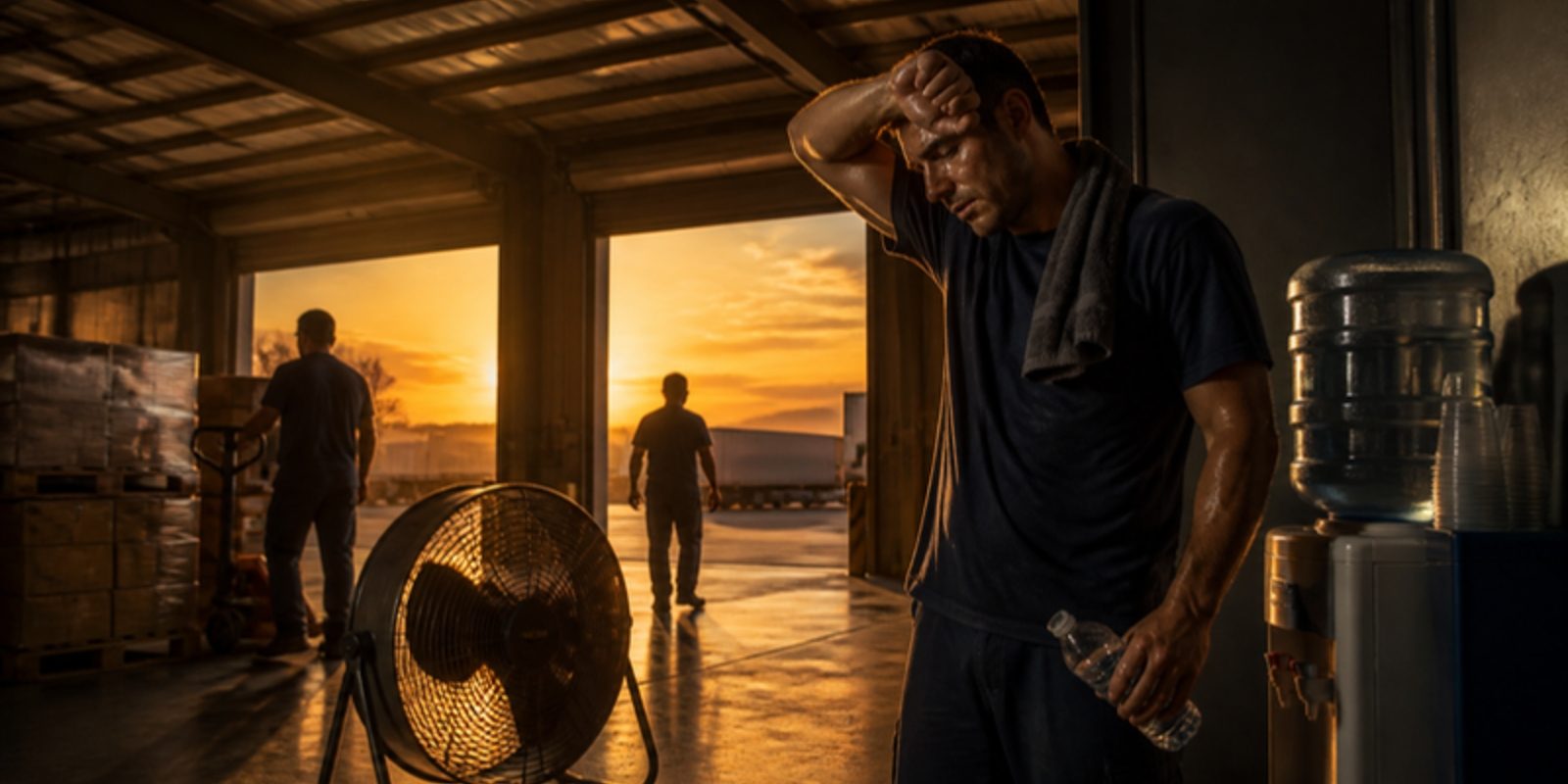
Hazard 8: Indoor heat under a metal roof
Heat is not only an outdoor problem. Large warehouses with metal roofs, poor airflow and dock doors open to summer air can become dangerously hot. A meta-analysis of 22 studies covering almost 22 million occupational injuries across six countries found injury risk rose about 1% for every 1°C above reference temperatures, with effects appearing within one to two days (Fatima et al., 2021). In South Australia, most heat complaints to the safety regulator concerned indoor workplaces such as kitchens, factories and warehouses (Hansen et al., 2018). OSHA has targeted indoor and outdoor heat through a National Emphasis Program since 2022, updated it in April 2026 to focus on 55 high-risk industries, and proposed a federal heat standard in 2024 (OSHA, 2022, 2024a, 2026a). California's indoor heat rule has applied since July 2024 to indoor workplaces at or above 82°F (about 28°C), with further controls required at 87°F (Cal. Code Regs. tit. 8, § 3396).
What leaders should do:
- Measure heat index at several points, including mezzanines and trailer interiors, not just at the office thermostat.
- Write a heat plan with triggers: extra water, cooling areas, scheduled breaks and adjusted rates when the heat index rises.
- Invest in engineering fixes such as roof insulation, high-volume fans, ventilation and spot cooling at packing stations.
Hazard 9: The first three days of a heatwave, or a new job
The body needs time to adapt to heat. Arbury et al. (2014) reviewed 20 OSHA heat enforcement cases from 2012–2013. Thirteen involved a death, nine of those deaths happened in the first three days on the job, and four happened on the first day. Prevention programmes were incomplete or missing, and none made provision for acclimatising new workers. NIOSH recommends that new workers start with no more than 20% of the usual heat exposure on day one and increase by no more than 20% a day. Experienced workers returning after time away should start at no more than 50% (National Institute for Occupational Safety and Health [NIOSH], n.d.-a; Jacklitsch et al., 2016).
What leaders should do:
- Build an acclimatisation schedule into onboarding for summer hires and anyone returning from leave.
- Give extra attention during the first hot days of the season, when nobody is acclimatised.
- Train supervisors to spot early signs such as confusion, cramps, heavy sweating or stopping sweating, and to act at once.
Hazard 10: The freezer that locks from the outside
Cold stores add their own hazards to everything else in a warehouse. The UK regulator lists accidental lock-in, refrigerant release, cold injury, reduced mobility from protective clothing, ice build-up and equipment failure. It describes lock-in as potentially fatal, recommends that every door can be opened from the inside and that a trapped-person alarm is fitted, and advises against lone working below −12°C (HSE, 2007). NIOSH notes that cold stress can cause hypothermia, frostbite and trench foot, and recommends warm break areas, rotation and limits on exposure time (NIOSH, n.d.-b).
What leaders should do:
- Test cold-store door releases and trapped-person alarms on a schedule, and record the tests.
- Use a buddy system or lone-worker alarms in sub-zero areas, and do a sweep before locking up.
- Provide properly rated insulated clothing and warm-up breaks, and plan rates around them.
Hazard 11: Carbon monoxide you cannot see or smell
Propane, petrol and diesel equipment indoors can quietly poison a building. In 1998, Iowa investigators traced three outbreaks of carbon monoxide poisoning to poorly maintained LPG forklifts. In one plastics plant, 34 of 75 employees had symptoms over three shifts, and the forklifts were emitting more than 40,000 ppm of carbon monoxide, against guidance of 2,000 to 10,000 ppm. In a warehouse, concentrations reached 267 ppm. NIOSH recommends an eight-hour average of no more than 35 ppm and a ceiling of 200 ppm (Centers for Disease Control and Prevention [CDC], 1999). OSHA's forklift standard requires carbon monoxide from trucks to stay within its exposure limits (29 C.F.R. § 1910.178(i)), and UK guidance warns that unflued heaters and engines in poorly ventilated spaces can raise levels rapidly (HSE, 2007).
What leaders should do:
- Fit fixed carbon monoxide monitors with alarms in areas where fuel-powered equipment runs indoors, especially in winter when doors are shut.
- Include exhaust emission checks in routine maintenance of every combustion-engine vehicle and heater.
- Treat clusters of headaches, dizziness or nausea as a possible exposure, not as "a bug going round".
Hazard 12: The battery charging corner
Electric equipment removes exhaust fumes but brings its own risks. Charging lead-acid batteries, including "maintenance free" ones, gives off hydrogen, which can explode if it collects near a spark or flame. Battery acid also burns skin and eyes (HSE, 2007). OSHA requires designated charging areas with facilities for flushing and neutralising spilled electrolyte, fire protection, protection of chargers from truck damage, ventilation, and a ban on smoking and open flames (29 C.F.R. § 1910.178(g)). The UK regulator adds that charging should not be done in cold stores because of low ventilation (HSE, 2007).
What leaders should do:
- Keep charging in a dedicated, well-ventilated, signed area with high-level ventilation and no ignition sources.
- Provide eyewash, acid-resistant PPE and mechanical aids for battery changes, and train the people who do them.
- Follow the manufacturer's instructions for every battery type, including newer lithium-ion packs, and keep the charging area clear of stored goods.
Hazard 13: The night shift brain
Many distribution centres run around the clock. The human body does not. A review by Folkard and Tucker (2003) concluded that both productivity and safety may be compromised at night, and that safety declines over successive night shifts, with longer hours on duty and with longer gaps between breaks. A review of 38 meta-analyses and 24 systematic reviews linked shift work with accidents as well as type 2 diabetes, weight gain and coronary heart disease (Kecklund & Axelsson, 2016). A meta-analysis of 27 studies found workers with sleep problems were 1.62 times as likely to be injured, and estimated that about 13% of work injuries could be attributed to sleep problems (Uehli et al., 2014). The International Agency for Research on Cancer classifies night shift work as probably carcinogenic to humans (Ward et al., 2019).
What leaders should do:
- Limit the number of consecutive night shifts and avoid quick turnarounds from late to early shifts.
- Schedule the most hazardous tasks, such as racking repairs or high-level work, away from the early-morning low point.
- Offer fatigue awareness training and make it acceptable to report being too tired to drive equipment.
Hazard 14: Peak season overtime
When orders surge, the easy answer is more hours. The research says those hours carry extra risk. In a U.S. national sample covering 89,729 person-years of work, jobs with overtime schedules had a 61% higher injury hazard rate than jobs without overtime, after adjusting for age, gender, occupation and industry. Working at least 12 hours a day was linked to a 37% higher hazard rate, and at least 60 hours a week to a 23% higher rate (Dembe et al., 2005). Breaks matter too. In an engineering company, the accident risk in the last half-hour of a two-hour stretch of continuous work was 2.08 times the risk in the first half-hour (Tucker et al., 2003).
What leaders should do:
- Cap consecutive long shifts and weekly hours during peak, and track who is working the most overtime.
- Protect regular breaks, especially in the second half of long shifts.
- Plan peak labour earlier so that overtime is the exception, not the strategy.
Part 3: Structures and machines: racking, conveyors, heights and docks
Hazard 15: The dented rack upright nobody reported
Pallet racking looks permanent, but every forklift knock weakens it. The UK regulator states that any damage reduces racking's load-carrying capacity, and recommends a person responsible for racking safety, weekly or other regular visual checks, and an inspection by a technically competent person at least every 12 months. It classifies damage with a traffic-light system: green for monitoring, amber for offloading and repair as soon as possible, and red for immediate offloading and isolation (HSE, 2007). In the United States, steel storage racks are designed and installed under the ANSI MH16.1 specification from the Rack Manufacturers Institute, which is referenced by the International Building Code (Rack Manufacturers Institute [RMI], 2023). In Europe, EN 15635 covers the use and maintenance of storage equipment (European Committee for Standardization [CEN], 2008).
What leaders should do:
- Make it easy and blame-free to report rack strikes immediately. A hidden dent is far more dangerous than a reported one.
- Schedule regular visual checks and an annual expert inspection, and act on amber and red findings the same day.
- Display load notices on every run, fit column guards at aisle ends and never let anyone modify racking without the supplier's approval.
Hazard 16: Overstacked loads and the pallet that leans
Falling goods injure people who are nowhere near a forklift. OSHA's materials storage rule requires that stored material must not create a hazard, and that items stacked in tiers be stacked, blocked, interlocked and limited in height so they are stable and secure against sliding or collapse (29 C.F.R. § 1910.176(b)). The UK regulator lists being hit by moving or falling objects among the main causes of major injuries in warehouses (HSE, 2007). Damaged pallets, broken shrink wrap and loads placed overhanging the beam all raise the risk.
What leaders should do:
- Set maximum stack heights for each product type and mark them on floor locations.
- Quarantine damaged pallets and re-wrap unstable loads before they go into racking.
- Fit anti-collapse mesh or netting where people work below high-level storage.
Hazard 17: The conveyor that pulls you in
Conveyors are everywhere in modern distribution and are easy to stop noticing. The UK regulator lists the main hazards: drawing-in and entanglement at rotating shafts, chains, head and tail pulleys, transfer points, return rollers and the gaps between powered and non-powered rollers, plus shearing between loads and fixed structures (HSE, 2007). OSHA requires machine guarding to protect operators and other employees from hazards such as ingoing nip points and rotating parts (29 C.F.R. § 1910.212). The guidance is blunt: riding on conveyors should be strictly prohibited, and long systems need emergency stops along their length and safe start-up procedures (HSE, 2007).
What leaders should do:
- Walk every conveyor line and check that nip points, drives and transfer points are guarded, and that guards are back in place after maintenance.
- Test emergency stops and pull cords regularly and keep them reachable along the whole line.
- Ban clearing jams by hand while the conveyor is running, and provide tools that keep hands out of the danger zone.
Hazard 18: "It'll only take a second" maintenance
Many conveyor and sorter injuries happen during jam clearing, cleaning or quick fixes, when someone reaches in without isolating the power. OSHA's lockout/tagout standard requires procedures, training and periodic inspections so that machines cannot start unexpectedly while people work on them (29 C.F.R. § 1910.147). OSHA estimates that compliance prevents about 120 deaths and 50,000 injuries each year in the United States (OSHA, n.d.). Automated systems add a twist: a stopped machine may simply be waiting for a sensor, and can restart without warning.
What leaders should do:
- Write machine-specific lockout procedures for every conveyor, sorter, baler and automated system, including stored energy such as gravity and air.
- Give every authorised worker their own lock and make "one person, one lock" non-negotiable.
- Audit lockout in practice, not just on paper, and include contractors and temporary maintenance staff.
Hazard 19: The open edge on the mezzanine
Mezzanines, pick modules and pallet drop zones put people beside unprotected edges every day. OSHA requires protection for any worker on a walking-working surface with an unprotected edge 4 feet (1.2 m) or more above a lower level, usually through guardrails, safety nets or personal fall protection (29 C.F.R. § 1910.28(b)). Guardrails must have a top rail at 42 inches (107 cm), plus or minus 3 inches, and where an opening is used as an access point, a self-closing gate or offset is required so that it is never left open (29 C.F.R. § 1910.29(b)). The UK regulator notes that marking edges is the last resort, because paint does not stop a fall (HSE, 2007).
What leaders should do:
- Fit self-closing or interlocked pallet gates at every mezzanine loading point, so the edge is never open to the person working there.
- Check that guardrails, toe boards and gates are intact after every equipment strike.
- Never allow people to stand on forks or pallets to reach a high location.
Hazard 20: The ladder grabbed for a quick reach
Ladders feel low-risk, which is why they are misused. In 2011, an estimated 34,000 nonfatal work-related ladder fall injuries were treated in U.S. emergency departments and 113 workers died in ladder falls (Socias et al., 2014). The UK regulator states that incorrect ladder use causes about a third of falls resulting in major injuries, and advises that ladders be used only for low-risk, short-duration tasks of up to 15 to 30 minutes (HSE, 2007).
What leaders should do:
- Provide rolling stairs, order pickers or platforms for regular high-level access, so ladders are not the default.
- Inspect ladders before use and remove damaged ones from service at once.
- Teach three points of contact and no overreaching, and make it normal to fetch the right equipment.
Hazard 21: The trailer that moves while someone is inside
Loading docks combine heavy vehicles, forklifts, people and a drop to the yard. A trailer can creep forward as a forklift brakes inside it, tip forward if it is parked without a tractor, or be driven away early. OSHA requires highway truck brakes to be set and wheel chocks placed under the rear wheels before forklifts board them, and notes that fixed jacks may be needed to stop an uncoupled semitrailer upending (29 C.F.R. § 1910.178(k)). Dockboards must be secured and the vehicle prevented from moving while people are on them (29 C.F.R. § 1910.26). The UK regulator says "driveaways", where a vehicle moves before loading is finished, cause serious and fatal accidents. It recommends vehicle restraint or interlock systems, key custody, traffic lights and supervision (HSE, 2007).
What leaders should do:
- Install vehicle restraints or dock locks with a clear red and green light system inside and out, and use wheel chocks where restraints are not fitted.
- Use trailer stands under uncoupled trailers, and agree a key or paperwork custody system with carriers.
- Keep dock doors closed or barriered when no trailer is present, to protect against falls from the dock edge.
Part 4: The floor and the system: traffic, slips, exits and hidden injuries
Hazard 22: Pedestrians and vehicles sharing the same aisle
Forklifts are covered in depth in our separate guide, but the people walking near them deserve a mention here. NIOSH recommends separating forklift traffic from workers on foot where possible, restricting forklift use near break rooms and exits at shift change, installing barriers, and using horns, lights and mirrors at blind corners (NIOSH, 2001). OSHA's forklift standard requires operator training that covers site-specific conditions such as pedestrian traffic and narrow aisles (29 C.F.R. § 1910.178(l)). The UK regulator advises keeping pedestrians and vehicles well clear of one another, ideally on completely different routes (HSE, 2007).
What leaders should do:
- Mark and, where possible, physically separate pedestrian routes from vehicle aisles, especially at doorways and blind corners.
- Set and enforce speed limits, and use mirrors, warning lights or proximity systems at intersections.
- Give visitors and drivers a clear safe waiting area away from loading operations.
Hazard 23: The shrink wrap, the spill and the stray strap
Slips and trips sound trivial until you see the injury data. In UK storage and warehousing, slips and trips caused a third of major injuries and a fifth of over-three-day injuries (HSE, 2007). Across several countries' surveillance systems, slip, trip and fall injuries made up 20 to 40% of disabling occupational injuries, and slipperiness contributed to 40 to 50% of fall-related injuries (Courtney et al., 2001). They are preventable. A comprehensive programme in hospitals, combining hazard assessments, housekeeping changes, flooring improvements and slip-resistant footwear, cut slip, trip and fall claims by 58% (Bell et al., 2008).
What leaders should do:
- Put waste bins for wrap, straps and cardboard where they are created, and clear walkways at set times every shift.
- Fix leaks, poor drainage near dock doors and damaged floors, and keep spill kits close to where spills happen.
- Consider slip-resistant footwear for the areas with the most claims, and light walkways well.
Hazard 24: The fire exit behind a pallet
In a busy period, the space in front of an exit door or under a sprinkler head is tempting storage. It is also a serious hazard. OSHA requires exit routes to be free and unobstructed, with no materials or equipment placed in them even temporarily (29 C.F.R. § 1910.37(a)(3)). Where sprinkler systems are installed, the minimum vertical clearance between sprinklers and material below is 18 inches (45.7 cm) (29 C.F.R. § 1910.159(c)(10)). The UK regulator warns that escape routes in cold stores can be blocked by collapsed racking or fallen stock, which is why routes and alarms need regular checks (HSE, 2007).
What leaders should do:
- Mark no-storage zones in front of exits, fire equipment and electrical panels, and include them in daily checks.
- Check that top-tier storage stays below sprinkler clearance, especially during peak when space runs short.
- Run evacuation drills on every shift, including nights and weekends.
Hazard 25: The injury that never gets reported
The most dangerous hazard may be the one you cannot see in your own data. Rosenman et al. (2006) matched records across five Michigan data sources and estimated that the national surveillance system missed up to 68% of work-related injuries and illnesses. On a large construction site, companies reported 3.11 injuries per 100 workers to OSHA, while another 10.90 per 100 eligible injuries went unreported. Underreporting reached 81% in firms with a poor safety climate, against 47% in firms with a positive one (Probst et al., 2008). Safety climate matters for outcomes too. A meta-analysis found group safety climate had the strongest association with accidents and injuries (Christian et al., 2009). Climate is set largely by supervisors: in 53 work groups, perceptions of supervisors' safety practices predicted later minor injuries (Zohar, 2000), and an intervention that changed how supervisors talked about safety reduced minor injuries (Zohar, 2002). Warehousing's unusually high restricted-duty rate (BLS, 2025) is one more reason to look beyond lost-time numbers.
What leaders should do:
- Remove incentives that reward "zero injuries" and replace them with leading indicators, such as hazards reported and fixed.
- Thank people for reporting near misses and early symptoms, and show them what changed as a result.
- Have supervisors talk about safety every shift, and make it clear that safety outranks speed when they conflict.
Your 10-point warehouse safety action plan
You do not need a new safety programme to make a difference. Across all 25 hazards, the same leadership moves come up again and again:
- Design the work first. Change loads, layouts, slotting and equipment before you rely on training or reminders.
- Audit your rates. Make sure every quota includes time for breaks, travel and safety steps, and watch whether injuries rise with pace.
- Protect new starters. Induct, buddy and ramp up new and agency workers, especially in peak season.
- Plan for heat. Measure it, acclimatise people and set clear triggers for extra breaks, water and cooling.
- Check the air. Monitor carbon monoxide where combustion equipment runs indoors and keep charging areas ventilated.
- Inspect your racking. Encourage instant damage reporting, run regular visual checks and book an annual expert inspection.
- Lock it out. Enforce lockout on every conveyor, sorter and automated system, with no exceptions for "quick" jobs.
- Secure the dock. Use vehicle restraints or chocks, trailer stands and a clear light system at every door.
- Keep floors and exits clear. Housekeeping is a safety control, not a cosmetic one.
- Make reporting safe. Measure leading indicators, thank people who speak up and show them that it changed something.
Want to lead safer, stronger operations? Explore BLTI's logistics, transportation and operations credentials, and take the free Leadership Flex Check to see how you lead your team when speed and safety pull in different directions.
Frequently asked questions
What are the most common hazards in a warehouse?
The most common causes of serious injury are overexertion from lifting and handling, slips, trips and falls, and being struck by moving or falling objects, alongside vehicle and forklift incidents (BLS, 2023; HSE, 2007). Heat, fatigue, racking damage, conveyors and loading docks are frequent, less visible risks.
Is warehouse work more dangerous than other jobs?
Yes, on average. In 2024, the U.S. warehousing and storage industry had 4.8 recordable injuries and illnesses per 100 full-time workers, compared with 2.3 for private industry as a whole, and 32 workers in the industry died from work injuries (BLS, 2025; BLS, n.d.).
How often should warehouse racking be inspected?
UK guidance recommends visual inspections weekly or at other regular intervals based on risk, and an inspection by a technically competent person at least every 12 months, with any damage reported immediately (HSE, 2007). Follow the rack manufacturer's instructions and the standards that apply where you operate, such as ANSI MH16.1 or EN 15635.
What temperature is too hot to work in a warehouse?
There is no single global limit. California's indoor heat rule applies from 82°F (about 28°C) and requires further controls at 87°F (Cal. Code Regs. tit. 8, § 3396). NIOSH recommends exposure limits based on heat stress, workload and acclimatisation, and gradual acclimatisation for new workers (Jacklitsch et al., 2016). Check the rules in your jurisdiction.
Do warehouse productivity quotas cause injuries?
Fast pace and repetition are recognised risk factors for musculoskeletal disorders (da Costa & Vieira, 2010), and California and Washington now restrict quotas that prevent breaks or safe working (California Department of Industrial Relations, n.d.; Wash. Rev. Code ch. 49.84, 2023). Company-specific claims about quotas and injuries are contested, so look at your own injury data by task and pace.
Does lifting training prevent back injuries?
Not on its own. A Cochrane review found no evidence that manual handling advice and training, with or without assistive devices, prevents back pain (Verbeek et al., 2011). Redesigning tasks and providing mechanical aids should come first, with training to support them.
About this research
This guide was compiled by the Better Leaders Training Institute (BLTI) research team. Every source below was checked for authors, year, title, publisher and DOI or stable link, using publisher records, Crossref, PubMed and official government and regulator websites. We prioritised peer-reviewed studies, systematic reviews, official statistics, regulations and regulator guidance. Where a figure comes from an advocacy organisation, a political committee report or a university labour-centre report, we say so in the text. Statistics describe the populations and years studied, and your site may differ. Regulations differ by country and change over time. This article is general information, not legal, medical or engineering advice.
References
Arbury, S., Jacklitsch, B., Farquah, O., Hodgson, M., Lamson, G., Martin, H., & Profitt, A. (2014). Heat illness and death among workers: United States, 2012–2013. MMWR Morbidity and Mortality Weekly Report, 63(31), 661–665. https://www.cdc.gov/mmwr/preview/mmwrhtml/mm6331a1.htm
Bell, J. L., Collins, J. W., Wolf, L., Grönqvist, R., Chiou, S., Chang, W.-R., Sorock, G. S., Courtney, T. K., Lombardi, D. A., & Evanoff, B. (2008). Evaluation of a comprehensive slip, trip and fall prevention programme for hospital employees. Ergonomics, 51(12), 1906–1925. https://doi.org/10.1080/00140130802248092
Breslin, F. C., & Smith, P. (2006). Trial by fire: A multivariate examination of the relation between job tenure and work injuries. Occupational and Environmental Medicine, 63(1), 27–32. https://doi.org/10.1136/oem.2005.021006
California Department of Industrial Relations. (n.d.). Frequently asked questions on warehouse quotas (Assembly Bill 701). Retrieved October 24, 2026, from https://www.dir.ca.gov/dlse/FAQ_warehousequotas.htm
Centers for Disease Control and Prevention. (1999). Carbon monoxide poisoning associated with use of LPG-powered (propane) forklifts in industrial settings: Iowa, 1998. MMWR Morbidity and Mortality Weekly Report, 48(49). https://www.cdc.gov/mmwr/preview/mmwrhtml/mm4849a2.htm
Christian, M. S., Bradley, J. C., Wallace, J. C., & Burke, M. J. (2009). Workplace safety: A meta-analysis of the roles of person and situation factors. Journal of Applied Psychology, 94(5), 1103–1127. https://doi.org/10.1037/a0016172
Control of hazardous energy (lockout/tagout), 29 C.F.R. § 1910.147 (2026). https://www.ecfr.gov/current/title-29/subtitle-B/chapter-XVII/part-1910/subpart-J/section-1910.147
Courtney, T. K., Sorock, G. S., Manning, D. P., Collins, J. W., & Holbein-Jenny, M. A. (2001). Occupational slip, trip, and fall-related injuries: Can the contribution of slipperiness be isolated? Ergonomics, 44(13), 1118–1137. https://doi.org/10.1080/00140130110085538
da Costa, B. R., & Vieira, E. R. (2010). Risk factors for work-related musculoskeletal disorders: A systematic review of recent longitudinal studies. American Journal of Industrial Medicine, 53(3), 285–323. https://doi.org/10.1002/ajim.20750
Dembe, A. E., Erickson, J. B., Delbos, R. G., & Banks, S. M. (2005). The impact of overtime and long work hours on occupational injuries and illnesses: New evidence from the United States. Occupational and Environmental Medicine, 62(9), 588–597. https://doi.org/10.1136/oem.2004.016667
Dockboards, 29 C.F.R. § 1910.26 (2026). https://www.ecfr.gov/current/title-29/subtitle-B/chapter-XVII/part-1910/subpart-D/section-1910.26
European Agency for Safety and Health at Work. (2019). Work-related musculoskeletal disorders: Prevalence, costs and demographics in the EU. Publications Office of the European Union. https://osha.europa.eu/sites/default/files/Work-related_MSDs_prevalence_costs_and_demographics_in_the_EU_report.pdf
European Committee for Standardization. (2008). Steel static storage systems: Application and maintenance of storage equipment (EN 15635:2008).
Exit routes, emergency action plans, and fire prevention plans: Maintenance, safeguards, and operational features for exit routes, 29 C.F.R. § 1910.37 (2026). https://www.ecfr.gov/current/title-29/subtitle-B/chapter-XVII/part-1910/subpart-E/section-1910.37
Fall protection systems and falling object protection: Criteria and practices, 29 C.F.R. § 1910.29 (2026). https://www.ecfr.gov/current/title-29/subtitle-B/chapter-XVII/part-1910/subpart-D/section-1910.29
Fatima, S. H., Rothmore, P., Giles, L. C., Varghese, B. M., & Bi, P. (2021). Extreme heat and occupational injuries in different climate zones: A systematic review and meta-analysis of epidemiological evidence. Environment International, 148, Article 106384. https://doi.org/10.1016/j.envint.2021.106384
Folkard, S., & Tucker, P. (2003). Shift work, safety and productivity. Occupational Medicine, 53(2), 95–101. https://doi.org/10.1093/occmed/kqg047
General requirements for all machines, 29 C.F.R. § 1910.212 (2026). https://www.ecfr.gov/current/title-29/subtitle-B/chapter-XVII/part-1910/subpart-O/section-1910.212
Gihleb, R., Giuntella, O., Stella, L., & Wang, T. (2022). Industrial robots, workers' safety, and health. Labour Economics, 78, Article 102205. https://doi.org/10.1016/j.labeco.2022.102205
Griffith, L. E., Shannon, H. S., Wells, R. P., Walter, S. D., Cole, D. C., Côté, P., Frank, J., Hogg-Johnson, S., & Langlois, L. E. (2012). Individual participant data meta-analysis of mechanical workplace risk factors and low back pain. American Journal of Public Health, 102(2), 309–318. https://doi.org/10.2105/AJPH.2011.300343
Gutelius, B., & Theodore, N. (2019). The future of warehouse work: Technological change in the U.S. logistics industry. UC Berkeley Center for Labor Research and Education; Working Partnerships USA. https://laborcenter.berkeley.edu/future-of-warehouse-work/
Hansen, A., Pisaniello, D., Varghese, B., Rowett, S., Hanson-Easey, S., Bi, P., & Nitschke, M. (2018). What can we learn about workplace heat stress management from a safety regulator complaints database? International Journal of Environmental Research and Public Health, 15(3), Article 459. https://doi.org/10.3390/ijerph15030459
Health and Safety Executive. (2007). Warehousing and storage: A guide to health and safety (HSG76, 2nd ed.). https://www.hse.gov.uk/pubns/priced/hsg76.pdf
Heat illness prevention in indoor places of employment, Cal. Code Regs. tit. 8, § 3396 (2024). https://www.dir.ca.gov/Title8/3396.html
Jacklitsch, B., Williams, W. J., Musolin, K., Coca, A., Kim, J.-H., & Turner, N. (2016). NIOSH criteria for a recommended standard: Occupational exposure to heat and hot environments (DHHS [NIOSH] Publication No. 2016-106). National Institute for Occupational Safety and Health. https://www.cdc.gov/niosh/docs/2016-106/
Kecklund, G., & Axelsson, J. (2016). Health consequences of shift work and insufficient sleep. BMJ, 355, Article i5210. https://doi.org/10.1136/bmj.i5210
Materials handling and storage: General, 29 C.F.R. § 1910.176 (2026). https://www.ecfr.gov/current/title-29/subtitle-B/chapter-XVII/part-1910/subpart-N/section-1910.176
National Institute for Occupational Safety and Health. (n.d.-a). Heat stress: Acclimatization. Centers for Disease Control and Prevention. Retrieved October 24, 2026, from https://www.cdc.gov/niosh/heat-stress/recommendations/acclimatization.html
National Institute for Occupational Safety and Health. (n.d.-b). Cold and work: Types, causes, preparation. Centers for Disease Control and Prevention. Retrieved October 24, 2026, from https://www.cdc.gov/niosh/cold-stress/about/index.html
National Institute for Occupational Safety and Health. (2001). NIOSH alert: Preventing injuries and deaths of workers who operate or work near forklifts (DHHS [NIOSH] Publication No. 2001-109). https://www.cdc.gov/niosh/publications/numbered/2001-109.html
Occupational Safety and Health Administration. (n.d.). Lockout/tagout [Fact sheet]. U.S. Department of Labor. https://www.osha.gov/sites/default/files/publications/OSHAFS3529.pdf
Occupational Safety and Health Administration. (2022). National emphasis program: Outdoor and indoor heat-related hazards (Directive No. CPL 03-00-024). U.S. Department of Labor. https://www.osha.gov/enforcement/directives/cpl-03-00-024
Occupational Safety and Health Administration. (2024a). Heat injury and illness prevention in outdoor and indoor work settings [Proposed rule]. Federal Register, 89(169), 70698–71073. https://www.govinfo.gov/content/pkg/FR-2024-08-30/html/2024-14824.htm
Occupational Safety and Health Administration. (2024b, December 19). US Department of Labor announces settlement with Amazon requiring corporate-wide ergonomic measures at facilities across the country [News release]. https://www.osha.gov/news/newsreleases/osha-national-news-release/20241219
Occupational Safety and Health Administration. (2026a, April 10). US Department of Labor updates national emphasis program to protect workers from indoor, outdoor heat hazards [News release]. https://www.osha.gov/news/newsreleases/osha-national-news-release/20260410
Occupational Safety and Health Administration. (2026b). National emphasis program on warehousing and distribution center operations (Directive No. CPL 03-00-026, revised). U.S. Department of Labor. https://www.osha.gov/sites/default/files/enforcement/directives/CPL-03-00-026.pdf
Powered industrial trucks, 29 C.F.R. § 1910.178 (2026). https://www.ecfr.gov/current/title-29/subtitle-B/chapter-XVII/part-1910/subpart-N/section-1910.178
Probst, T. M., Brubaker, T. L., & Barsotti, A. (2008). Organizational injury rate underreporting: The moderating effect of organizational safety climate. Journal of Applied Psychology, 93(5), 1147–1154. https://doi.org/10.1037/0021-9010.93.5.1147
Protection from fall hazards, 29 C.F.R. § 1910.28 (2026). https://www.ecfr.gov/current/title-29/subtitle-B/chapter-XVII/part-1910/subpart-D/section-1910.28
Rack Manufacturers Institute. (2023). Specification for the design, testing and utilization of industrial steel storage racks (ANSI MH16.1-2023). MHI.
Rosenman, K. D., Kalush, A., Reilly, M. J., Gardiner, J. C., Reeves, M., & Luo, Z. (2006). How much work-related injury and illness is missed by the current national surveillance system? Journal of Occupational and Environmental Medicine, 48(4), 357–365. https://doi.org/10.1097/01.jom.0000205864.81970.63
Smith, C. K., Silverstein, B. A., Bonauto, D. K., Adams, D., & Fan, Z. J. (2010). Temporary workers in Washington State. American Journal of Industrial Medicine, 53(2), 135–145. https://doi.org/10.1002/ajim.20728
Socias, C. M., Chaumont Menéndez, C. K., Collins, J. W., & Simeonov, P. (2014). Occupational ladder fall injuries: United States, 2011. MMWR Morbidity and Mortality Weekly Report, 63(16). https://www.cdc.gov/mmwr/preview/mmwrhtml/mm6316a2.htm
Sprinkler systems: Automatic sprinkler systems, 29 C.F.R. § 1910.159 (2026). https://www.ecfr.gov/current/title-29/subtitle-B/chapter-XVII/part-1910/subpart-L/section-1910.159
Strategic Organizing Center. (2022). The injury machine: How Amazon's production system hurts workers. https://thesoc.org/wp-content/uploads/sites/342/The-Injury-Machine_How-Amazons-Production-System-Hurts-Workers.pdf
Tucker, P., Folkard, S., & Macdonald, I. (2003). Rest breaks and accident risk. The Lancet, 361(9358), 680. https://doi.org/10.1016/S0140-6736(03)12566-4
Uehli, K., Mehta, A. J., Miedinger, D., Hug, K., Schindler, C., Holsboer-Trachsler, E., Leuppi, J. D., & Künzli, N. (2014). Sleep problems and work injuries: A systematic review and meta-analysis. Sleep Medicine Reviews, 18(1), 61–73. https://doi.org/10.1016/j.smrv.2013.01.004
U.S. Bureau of Labor Statistics. (n.d.). Industries at a glance: Warehousing and storage, NAICS 493. Retrieved October 24, 2026, from https://www.bls.gov/iag/tgs/iag493.htm
U.S. Bureau of Labor Statistics. (2023, November 8). Employer-reported workplace injuries and illnesses: 2021–2022 (News Release No. USDL-23-2359). https://www.bls.gov/news.release/archives/osh_11082023.pdf
U.S. Bureau of Labor Statistics. (2025). Table 1. Incidence rates of nonfatal occupational injuries and illnesses by industry and case types, 2024 [Data table]. https://www.bls.gov/web/osh/table-1-industry-rates-national.htm
U.S. Senate Committee on Health, Education, Labor, and Pensions, Majority Staff. (2024). The "injury-productivity trade-off": How Amazon's obsession with speed creates uniquely dangerous warehouses. https://www.help.senate.gov/imo/media/doc/amazon_investigation.pdf
Verbeek, J. H., Martimo, K.-P., Karppinen, J., Kuijer, P. P. F. M., Viikari-Juntura, E., & Takala, E.-P. (2011). Manual material handling advice and assistive devices for preventing and treating back pain in workers. Cochrane Database of Systematic Reviews, 2011(6), Article CD005958. https://doi.org/10.1002/14651858.CD005958.pub3
Ward, E. M., Germolec, D., Kogevinas, M., McCormick, D., Vermeulen, R., Anisimov, V. N., Aronson, K. J., Bhatti, P., Cocco, P., Costa, G., Dorman, D. C., Fu, L., Garde, A. H., Guénel, P., Hansen, J., Härmä, M. I., Kawai, K., Khizkhin, E. A., Knutsson, A., . . . Schubauer-Berigan, M. K. (2019). Carcinogenicity of night shift work. The Lancet Oncology, 20(8), 1058–1059. https://doi.org/10.1016/S1470-2045(19)30455-3
Warehouse distribution centers, Wash. Rev. Code ch. 49.84 (2023). https://app.leg.wa.gov/RCW/default.aspx?cite=49.84
Waters, T. R., Lu, M.-L., Piacitelli, L. A., Werren, D., & Deddens, J. A. (2011). Efficacy of the revised NIOSH lifting equation to predict risk of low back pain due to manual lifting: Expanded cross-sectional analysis. Journal of Occupational and Environmental Medicine, 53(9), 1061–1067. https://doi.org/10.1097/JOM.0b013e31822cfe5e
Waters, T. R., Putz-Anderson, V., & Garg, A. (1994). Applications manual for the revised NIOSH lifting equation (DHHS [NIOSH] Publication No. 94-110). National Institute for Occupational Safety and Health. https://www.cdc.gov/niosh/docs/94-110/
Waters, T. R., Putz-Anderson, V., Garg, A., & Fine, L. J. (1993). Revised NIOSH equation for the design and evaluation of manual lifting tasks. Ergonomics, 36(7), 749–776. https://doi.org/10.1080/00140139308967940
Zohar, D. (2000). A group-level model of safety climate: Testing the effect of group climate on microaccidents in manufacturing jobs. Journal of Applied Psychology, 85(4), 587–596. https://doi.org/10.1037/0021-9010.85.4.587
Zohar, D. (2002). Modifying supervisory practices to improve subunit safety: A leadership-based intervention model. Journal of Applied Psychology, 87(1), 156–163. https://doi.org/10.1037/0021-9010.87.1.156
Videos
WorkSafeBC. (2010, February 24). Incident investigation: Failure to lock out injures sawmill workers [Video]. YouTube. https://www.youtube.com/watch?v=SZG4n1S7n2k
WorkSafeBC. (2012, June 6). Lifting in the workplace [Video]. YouTube. https://www.youtube.com/watch?v=zss9jRW4oWw
WorkSafeBC. (2023, November 21). Operating mobile equipment: What you can't see [Video]. YouTube. https://www.youtube.com/watch?v=GsegUvsvk4c
WorkSafeBC. (2025, August 29). Heat stress: Know the signs [Video]. YouTube. https://www.youtube.com/watch?v=TlEbfDPOV1o
WorkSafeBC. (2026, April 17). Choose the right ladder and use it safely [Video]. YouTube. https://www.youtube.com/watch?v=8HdzqCOayCA