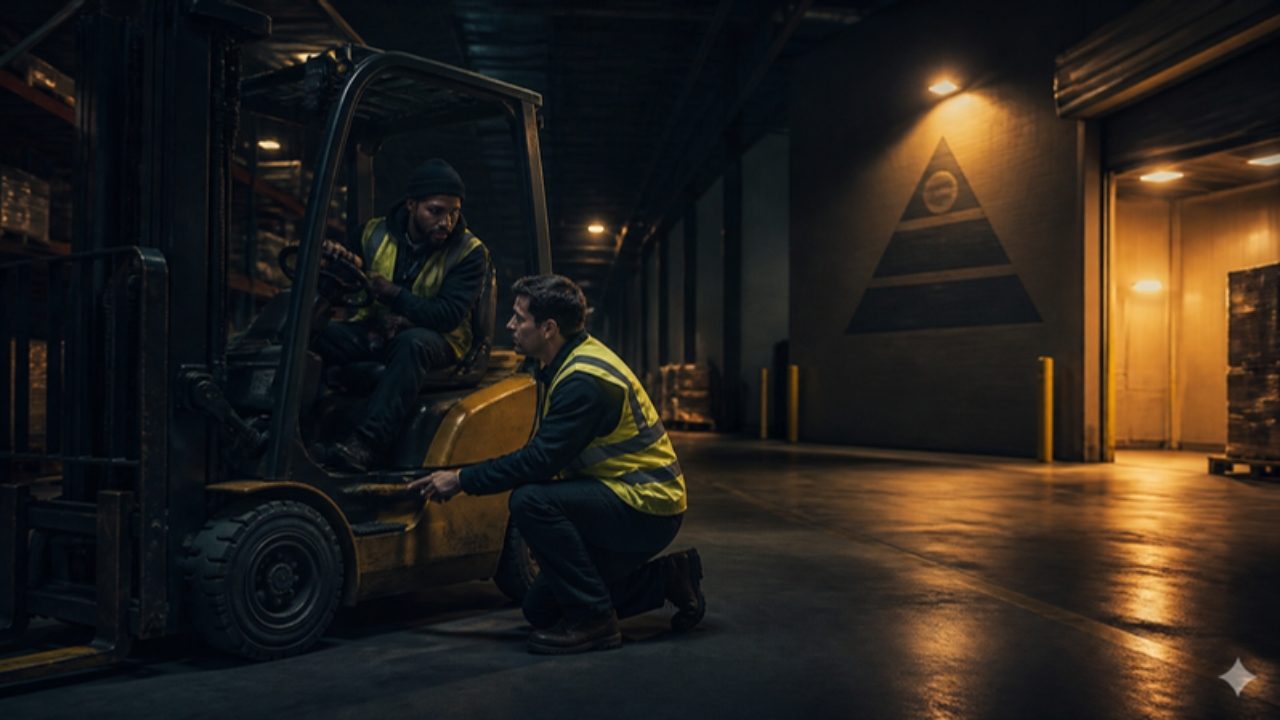

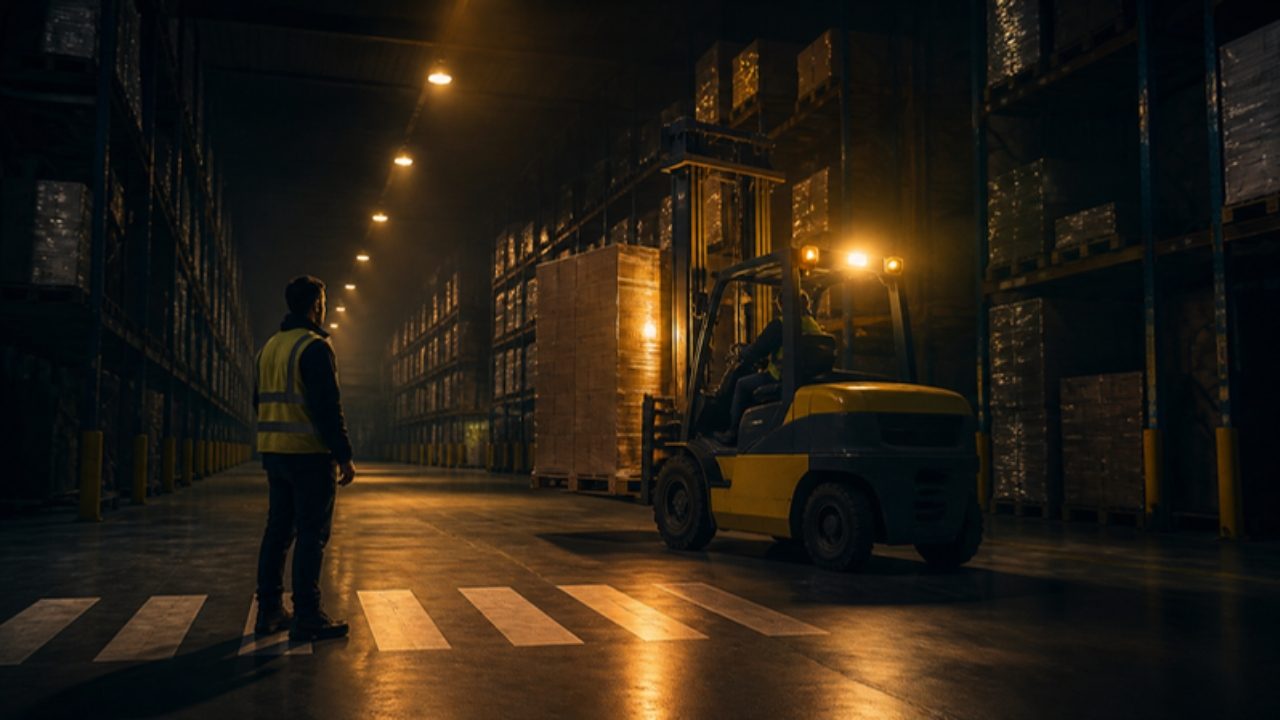
A forklift weighs several times more than the car in your driveway, and it is driven a few metres from people on foot. It steers from the rear, it often carries a load that blocks the driver's view, and it can tip over in a turn taken just a little too fast. In the United States, forklifts were the source of 84 work-related deaths in 2024 alone. That is roughly one worker every four to five days.
Most of those deaths follow the same few patterns, and they have been documented for decades. Government fatality investigators, injury researchers and regulators on three continents keep reaching the same conclusions: overturns crush operators who are not belted in, pedestrians are struck in shared aisles, and training that looks good on paper often fails on the warehouse floor.
This guide collects 25 research-backed facts about forklift (powered industrial truck) safety. Each one comes with the evidence, an APA citation you can check, and three practical steps that supervisors, managers and operations leaders can put into practice this week.
The short version: Forklift deaths are not random. Tip-overs, pedestrian strikes, falls from forks and crushing at docks account for most of them. The fixes are known: real training with evaluation, daily checks, seatbelts, slower speeds, and keeping people on foot physically apart from trucks. Leaders decide whether those fixes actually happen.
Key takeaways
- 614 U.S. workers died in forklift-related incidents from 2011 to 2017, and more than 7,000 suffered injuries with days away from work every year (U.S. Bureau of Labor Statistics [BLS], 2019).
- Overturns are the leading cause of forklift deaths, about 22% of 1,021 deaths from 1980 to 1994, followed by pedestrians struck (20%) (Collins, Landen, et al., 1999).
- Overhead mirrors at blind corners cut the odds of a collision by about two-thirds (odds ratio 0.33) in a case-control study of automotive plants (Collins, Smith, Baker, Landsittel, et al., 1999).
- OSHA requires an evaluation of every operator at least once every three years, and refresher training after any accident, near miss or unsafe driving (29 C.F.R. § 1910.178(l)(4)).
- Forklifts caused 29% of workplace carbon monoxide poisoning incidents in Washington State workers' compensation claims from 2000 to 2005 (Reeb-Whitaker et al., 2010).
- Hands-on, engaging training works better than lectures and videos, according to a meta-analysis of 95 studies covering 20,991 workers (Burke et al., 2006).
How to read this guide: The 25 facts are grouped into four parts: the numbers, the rules, the physics of staying upright, and building a system that protects people on foot. Citations in brackets lead to the full reference list at the bottom. Regulations differ between countries, and the U.S. (OSHA) and UK (HSE) rules quoted here are examples, not a complete list. This article is general information, not legal or engineering advice. Always follow your truck manufacturer's instructions and the law where you work, and get competent professional advice for your site.
Part 1: The deadly numbers
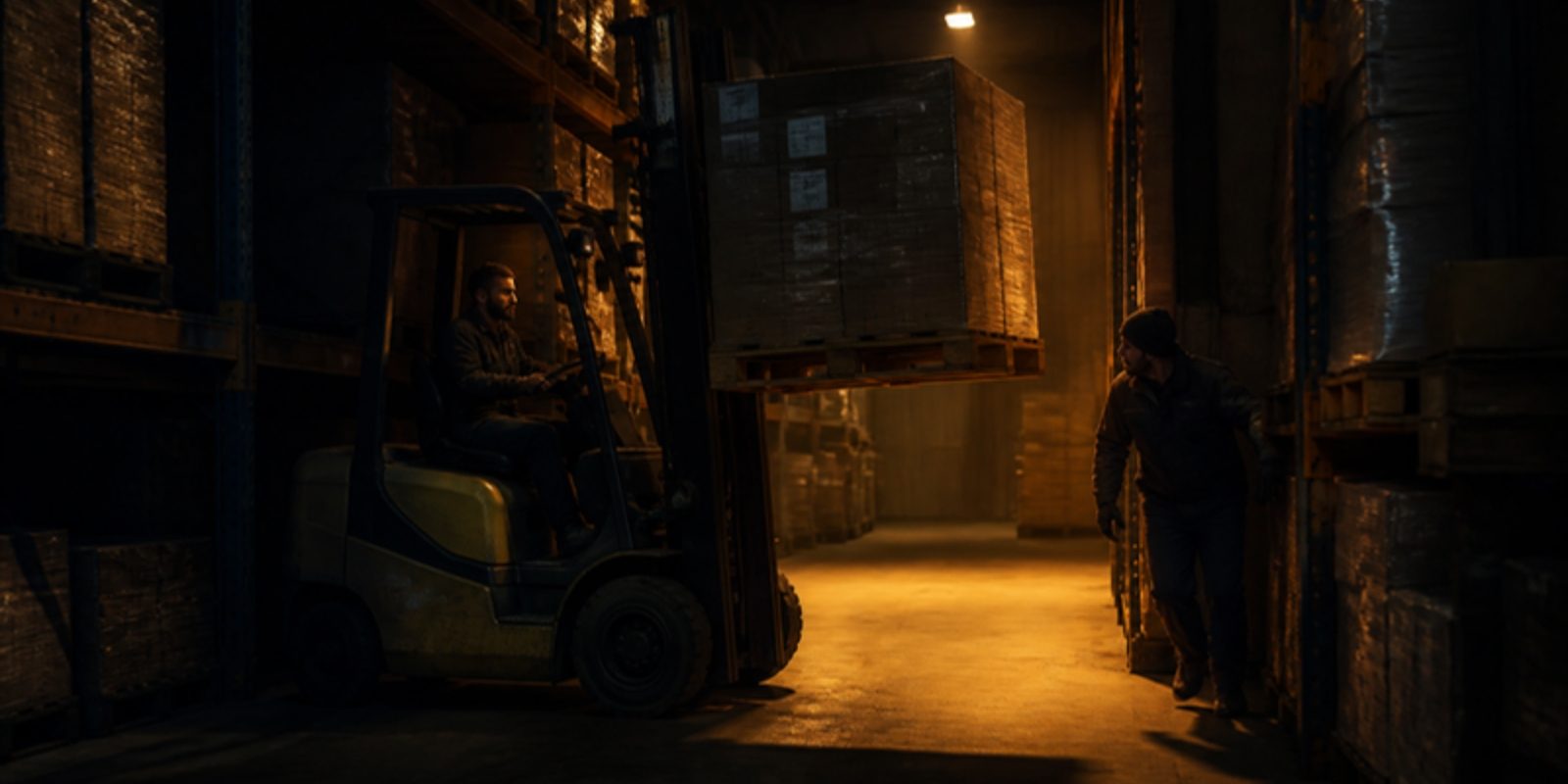
Fact 1: A forklift kills a U.S. worker roughly every four to five days
The Bureau of Labor Statistics counted 614 workers killed in forklift-related incidents from 2011 to 2017, an average of almost 88 a year, with 74 deaths in 2017 alone (BLS, 2019). More recent figures are similar. The National Safety Council reports that forklifts were the source of 84 work-related deaths in 2024 (National Safety Council, n.d.). NIOSH put the toll at nearly 100 deaths and about 20,000 serious injuries a year when it issued its forklift Alert, based on 1990s data (National Institute for Occupational Safety and Health [NIOSH], 2001). In other words, decades of regulation have not made this problem go away.
What leaders should do:
- Treat forklift operations as a high-consequence activity in your risk register, not a routine material-handling task.
- Report forklift incidents and near misses as a separate line in your monthly safety review, so trends are visible.
- Ask one blunt question at your next site walk: "If someone were killed by a forklift here, where would it most likely happen?" Then fix that spot first.
Fact 2: Forklifts are among the deadliest machines at work
NIOSH researchers analysed every machine-related work death in U.S. federal fatality data from 1992 to 2010. Forklifts were involved in 1,487 deaths, 10% of all machine-related fatalities, second only to tractors (Marsh & Fosbroke, 2015). Machine-related death rates did fall over the period, by an average of 2.8% a year, but forklifts remained one of the main sources. The authors note that forklifts are narrow, highly manoeuvrable machines that can overturn at speed, in tight turns, on uneven ground or with unbalanced elevated loads (Marsh & Fosbroke, 2015).
What leaders should do:
- Put forklifts on the same footing as other high-risk machinery: written procedures, authorised users only, and key control.
- Count your trucks, attachments and authorised operators. Many sites cannot answer this accurately.
- Review whether every truck task is still necessary. Removing a trip from a route removes its risk entirely.
Fact 3: Forklift injuries are longer and more serious than the average work injury
In 2017 there were 9,050 U.S. forklift-related injuries or illnesses with days away from work. The median time off was 13 days, against 8 days for all cases, and pedestrian cases had the longest median at 20 days (BLS, 2019). The National Safety Council reports 25,110 forklift cases involving days away, job restriction or transfer in 2023 to 2024 (National Safety Council, n.d.). At one large automaker, forklift and powered vehicle injuries that caused lost time averaged 61 lost workdays each (Collins, Smith, Baker, & Warner, 1999). In a German trauma centre series of 109 patients, recovery took an average of 33.6 weeks, 8 needed amputations, and 40% were left with a pensionable reduction in earning capacity (Ull et al., 2022). Operators also face chronic harm: a meta-analysis found forklift operators had about twice the odds of lower back pain (meta-odds ratio 2.13) (Waters et al., 2005).
What leaders should do:
- When you make the business case for safety investment, use the real cost of a serious forklift injury, including months of absence and replacement labour.
- Track severity as well as frequency. A site with few incidents but serious crush injuries is not a safe site.
- Include seat condition, suspension and floor surfaces in maintenance plans to reduce operators' long-term back strain.
Fact 4: Tip-overs are the single biggest killer of forklift operators
NIOSH analysed death certificates for 1,021 U.S. workers killed in forklift-related incidents from 1980 to 1994. Overturns were the most common circumstance at 22% (Collins, Landen, et al., 1999). NIOSH's Alert describes overturns as the leading cause of forklift deaths, at about a quarter of the total (NIOSH, 2001). Federal census data for 1991 to 1992 showed the same pattern, with overturns making up 24% of 170 forklift deaths (Occupational Safety and Health Administration [OSHA], 1998). OSHA's own review of 53 fatality files found that 42% of victims were crushed by a tipping vehicle (OSHA, 1998). A separate analysis of OSHA records attributed about 18% of forklift deaths to rollovers, with a higher than expected share in retail building-materials and hardware stores (Janicak & Deal, 1999).
What leaders should do:
- Make tip-over prevention and tip-over survival (seatbelt on, stay in the seat) a named topic in every operator briefing.
- Pay extra attention to sites where customers or untrained staff are near trucks, such as retail yards and trade counters.
- Investigate every near tip-over, including wheels lifting, as a serious incident.
Fact 5: People on foot are the second great group of victims
In the 15-year NIOSH study, pedestrians struck by forklifts made up 20% of deaths, and workers crushed by forklifts another 16% (Collins, Landen, et al., 1999). In 54 automotive plants, the most common forklift incident involved pedestrians, at 35% of 916 incidents (Collins, Smith, Baker, & Warner, 1999). In 2017, 1,850 U.S. forklift injuries with days away from work involved pedestrians while the truck was in use (BLS, 2019). Across the food supply chain, OSHA severe-injury reports from 2015 to 2020 showed that transportation events such as pedestrian-vehicle incidents were the most frequent event type, with lower-limb fractures most common (Michael & Gorucu, 2023). In Victoria, Australia, pedestrians accounted for 65 of 157 accepted forklift injury claims in the year before May 2024, and three of the eight people killed in forklift incidents since 2019 (WorkSafe Victoria, 2024). Hospital and medical examiner studies agree that the most serious injuries and many deaths come from a forklift striking or running over someone (Born et al., 1996; Lifschultz & Donoghue, 1994).
What leaders should do:
- Count pedestrian exposure: how many people walk through truck areas per shift, and why. Each reason is a design problem to solve.
- Train every worker who walks in truck areas, not just operators. Visitors and drivers need a short briefing too.
- Investigate pedestrian near misses as seriously as collisions. They show where the next strike will happen.
Fact 6: New workers and small workplaces carry the heaviest risk
A study of 1,061 compensated forklift accidents in Korea in 2018 found many involved workers employed for less than six months and workplaces with 49 or fewer employees (Kim, 2021). This matches broader evidence. In Canadian compensation data, workers in their first month on the job were over four times more likely to have a lost-time claim than workers with more than a year in the job, at every age (Breslin & Smith, 2006). New staff do not yet know the site's blind corners, traffic rules or loads. Agency workers, seasonal peaks and fast hiring all increase this exposure.
What leaders should do:
- Give every new starter and agency worker a site-specific forklift and traffic briefing before their first shift, not after.
- Pair new operators with an experienced buddy and supervise them closely for their first weeks.
- During peak season, slow down onboarding of new truck operators rather than speeding it up.
Part 2: The rules: training, evaluation and daily checks
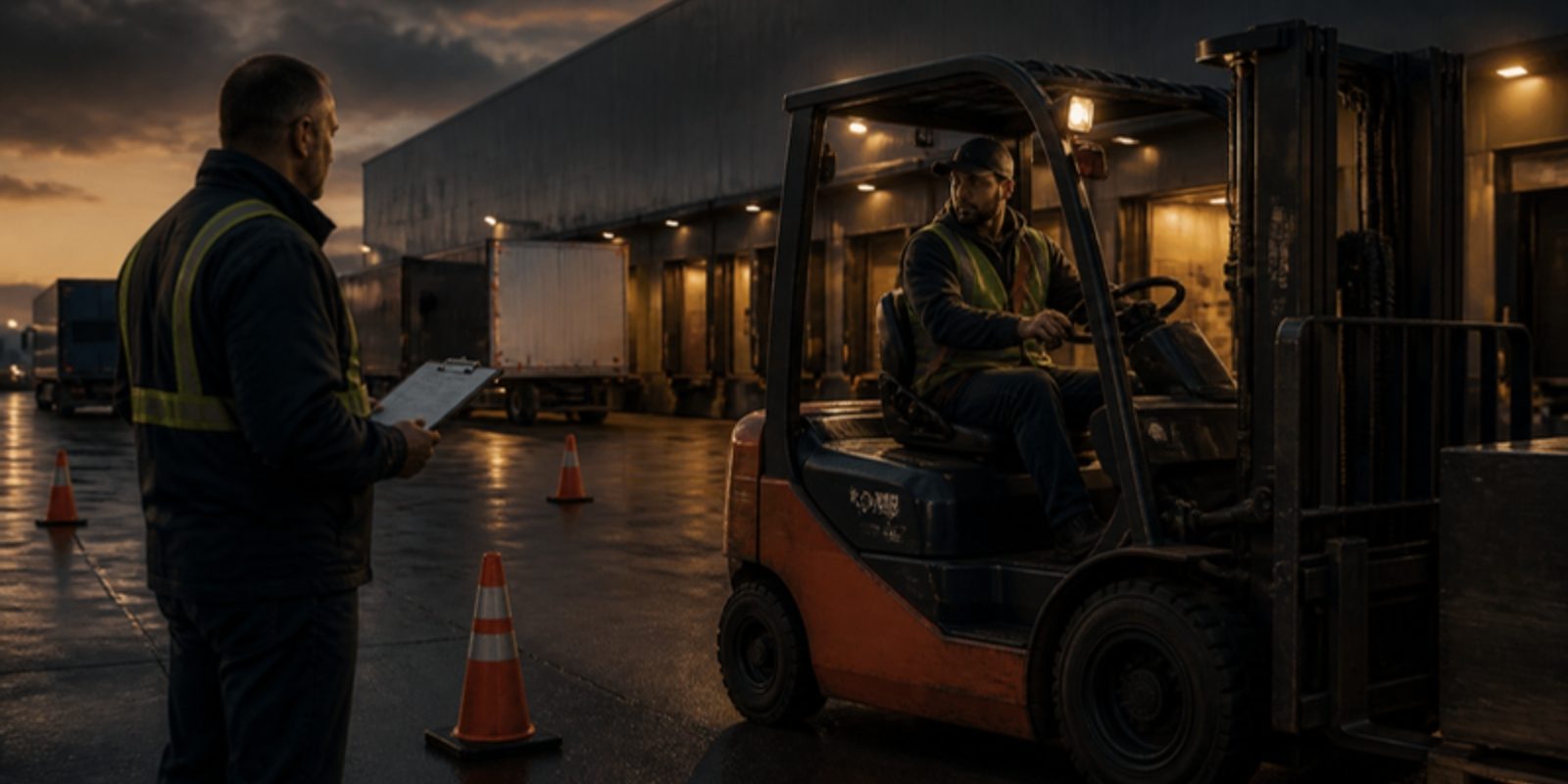
Fact 7: In the U.S., nobody may drive a forklift without training and a workplace evaluation
OSHA requires employers to ensure every operator is competent, as shown by completing training and an evaluation (29 C.F.R. § 1910.178(l)(1)(i)). Training must combine formal instruction, practical training and an evaluation of the operator's performance in the workplace. It must be delivered by people with the knowledge, training and experience to train operators and judge their competence (29 C.F.R. § 1910.178(l)(2)). The employer must certify each operator, recording the name, the dates and who did the training and evaluation (29 C.F.R. § 1910.178(l)(6)). When OSHA finalised these rules in 1998, it estimated they would prevent 11 deaths and 9,422 injuries every year (OSHA, 1998). Under federal child labour rules, workers under 18 may not operate forklifts in non-agricultural jobs (NIOSH, 2001).
What leaders should do:
- Audit your training records against the standard: name, training date, evaluation date and evaluator for every operator.
- Make sure training includes hands-on practice and an observed evaluation on your site, not only an online module.
- Control keys so that only authorised, evaluated operators can start a truck.
Fact 8: The three-year evaluation is a minimum, not a schedule
OSHA requires an evaluation of each operator's performance at least once every three years (29 C.F.R. § 1910.178(l)(4)(iii)). But refresher training is required much sooner when any of five things happen: the operator is seen driving unsafely, is involved in an accident or near miss, receives an evaluation showing unsafe operation, is assigned to a different type of truck, or the workplace changes in a way that affects safe operation (29 C.F.R. § 1910.178(l)(4)(ii)). In the UK, HSE guidance says there is no fixed refresher period, but suggests employers may choose automatic refresher training or a retest after a set period, such as three to five years, while still monitoring performance in between (Health and Safety Executive [HSE], 2013, para. 79).
What leaders should do:
- Build the five refresher triggers into your incident and near-miss process, so retraining happens automatically.
- Put evaluation due dates in a tracker with alerts 60 days ahead.
- Have supervisors do short, informal driving observations every month, so problems surface long before the three-year mark.
Fact 9: Training must match the truck, the load and the site
OSHA lists two sets of required training topics. Truck-related topics include controls, steering, visibility, fork and attachment use, capacity, stability, inspection and refuelling or recharging. Workplace-related topics include surface conditions, load stability, pedestrian traffic, narrow aisles, ramps and poorly ventilated areas (29 C.F.R. § 1910.178(l)(3)). HSE's Approved Code of Practice describes three stages: basic training, specific job training on the truck and tasks the person will actually do, and familiarisation on the job under close supervision (HSE, 2013, para. 55). HSE also advises that operators be reasonably fit to drive and never be allowed to operate when unfit through alcohol or drugs (HSE, 2013, para. 50). Medical screening alone is not a silver bullet: one five-year review of a U.S. Navy facility found no incidents with an identified medical factor and no medical disqualifications (Cordes et al., 2025).
What leaders should do:
- Map every truck type on site to the operators authorised for it. Someone trained on a counterbalance truck is not automatically safe on a reach truck.
- Add a site-specific module covering your routes, docks, ramps, racking heights and pedestrian zones.
- Set and enforce a clear fitness-for-duty rule covering fatigue, alcohol, drugs and medication.
Fact 10: Every truck must be checked before use, at least daily
OSHA requires trucks to be examined before being placed in service and not used if the check shows any condition that affects safety. The examination must be done at least daily, and after each shift where trucks are used around the clock (29 C.F.R. § 1910.178(q)(7)). Any truck that is defective or unsafe must be taken out of service until repaired (29 C.F.R. § 1910.178(p)(1), (q)(1)). HSE guidance asks for a documented pre-shift check covering tyres, wheels, brakes, steering, fluid levels, batteries, lifting and tilting systems, hydraulics, the overhead guard, forks, chains, horn, lights and mirrors (HSE, 2013, para. 162). Defects missed in these checks kill. In one NIOSH case, a damaged rear axle stop let a forklift sway and overturn, killing the operator (NIOSH, 2001).
What leaders should do:
- Use a short, truck-specific checklist and require a signature or digital record before each shift.
- Give operators clear authority to tag a truck out of service without pressure from production targets.
- Review completed checklists weekly. A checklist that never reports a defect is probably not being done properly.
Fact 11: Worn or cracked forks can drop a load without warning
Forks carry the whole load on a narrow piece of steel, and the heel (the bend) takes the most stress. HSE guidance tells operators to check forks for cracks, particularly at the heels and mounting hooks, and for bent tips and damaged locks before every shift (HSE, 2013, para. 162). Lifting parts, including forks, chains and the mast, must be thoroughly examined by a competent person at least every 12 months in Great Britain, or every six months if the truck is used to lift people (HSE, 2013, paras. 165–166). SafeWork NSW, an Australian regulator, tells employers that heel wear must not exceed 10% and that forks beyond that limit must be replaced, measured by comparing the heel's thickness with the vertical shank (SafeWork NSW, 2019). The same guide warns operators not to drag fork heels on the floor, which causes this wear.
What leaders should do:
- Use the rejection criteria in your truck or fork manufacturer's manual, and the inspection standard that applies in your country, as your rule.
- Give maintenance staff a fork wear gauge or calipers and record measurements at each examination.
- Coach operators to stop dragging forks, a habit that wears them out early.
Fact 12: The capacity plate is a legal limit, and modifications can void it
OSHA allows only loads within the truck's rated capacity (29 C.F.R. § 1910.178(o)(2)). Users may not make modifications or additions that affect capacity or safe operation without the manufacturer's prior written approval, and capacity plates must be updated after any approved change (29 C.F.R. § 1910.178(a)(4)). HSE warns that attachments, including fork extensions, affect stability and must not be used without the supplier's or manufacturer's advice (HSE, 2013, para. 99). It also warns that on electric trucks the battery forms part of the counterweight, so only the specified battery size and weight should be fitted (HSE, 2013, para. 132).
What leaders should do:
- Check that every truck has a legible capacity plate that matches its current mast, forks and attachments.
- Ban improvised add-ons, such as extra counterweight or homemade fork extensions, unless the manufacturer approves them in writing.
- When you buy a new attachment, get an updated capacity rating before it goes into use.
Fact 13: Regulators keep finding the same failures
The powered industrial truck standard appears on OSHA's preliminary list of the 10 most frequently cited standards for fiscal year 2026, in seventh place (OSHA, n.d.-b). In July 2026 OSHA renewed its National Emphasis Program on warehousing and distribution centres for five years, with powered industrial vehicle operations as a named focus of every inspection. In the first 18 months of the previous programme, launched in July 2023, OSHA identified more than 1,700 violations. From 2020 to 2024, general warehousing and storage had an average recordable injury rate of 5.2 cases per 100 full-time workers, against 2.6 for all private industry (OSHA, 2026). WorkSafe Victoria launched a statewide forklift inspection programme in 2024 focused on manufacturing, postal and warehousing sites (WorkSafe Victoria, 2024).
What leaders should do:
- Run your own mock inspection against 29 C.F.R. § 1910.178 or your local equivalent, before a regulator does.
- Prioritise the basics inspectors cite most: training records, evaluations, daily checks and defective trucks left in service.
- If you run warehousing or delivery operations in the U.S., assume your site could be inspected under the emphasis programme.
Part 3: The physics of staying upright
Fact 14: A forklift balances on an invisible triangle
Most counterbalanced forklifts rest on three points: the two front wheels and the centre of the rear axle. OSHA's non-mandatory guidance calls the area between these points the stability triangle. While the combined centre of gravity of the truck and load stays inside the triangle, the truck is stable. If it moves outside, the truck may tip over (29 C.F.R. § 1910.178, Appendix A, A-6.1). Lateral stability depends on where the load sits, how high it is raised and how much the truck leans. Moving the truck adds dynamic forces as weight shifts during braking, acceleration and turning (29 C.F.R. § 1910.178, Appendix A). That is why a truck that is stable standing still can overturn in motion.
What leaders should do:
- Teach the stability triangle with a simple model or diagram. Operators who understand why trucks tip are more likely to respect the limits.
- Insist that loads travel low and tilted back, and are raised only when the truck is stopped at the stack.
- Treat potholes, kerbs and debris as tip-over hazards, not just as maintenance issues.
Fact 15: A longer load can overload a truck without weighing more
The load centre is the distance from the face of the forks to the load's centre of gravity. OSHA notes that trucks up to 30,000 pounds capacity are usually rated at a 24-inch (about 600 mm) load centre (29 C.F.R. § 1910.178, Appendix A). Its guidance warns that loads which are off-centre, poorly distributed or oversized can exceed capacity and unbalance the forklift (OSHA, n.d.-a). For unusually long loads or offset centres of gravity, OSHA recommends calculating the maximum allowable load-moment before lifting (29 C.F.R. § 1910.178, Appendix A, A-5.3). HSE adds that a counterbalanced truck can tip forward if the load is too heavy or badly placed, raised while travelling, braked harshly, or hits an overhead obstruction (HSE, 2013, para. 131).
What leaders should do:
- Post the capacity chart in each cab and train operators to read it for the actual load centre and lift height.
- Flag unusual loads (long, tall, offset or liquid) for a supervisor check before they are moved.
- Require loads to be pushed fully back against the carriage before lifting.
Fact 16: Speed and sharp turns cause tip-overs, even at walking pace
OSHA requires trucks to be driven, under all conditions, at a speed that allows a safe stop, and requires speed to be reduced in turns (29 C.F.R. § 1910.178(n)(8), (n)(15)). In OSHA's review of fatal tip-overs, the most common causes were loss of control (speeding, elevated loads, mechanical problems) and turns that were too sharp (OSHA, 1998). The speeds involved are often low. In one NIOSH case, a forklift travelling about 5 miles per hour tipped as the operator turned behind a trailer on a gentle 3% grade (NIOSH, 2001). In a Massachusetts case, a 22-year-old was killed when his three-wheeled forklift tipped in a sharp turn at its 9 mph maximum speed; he was not belted (Massachusetts Department of Public Health, 2000).
What leaders should do:
- Set written site speed limits for each area and enforce them, including at shift ends when people rush.
- Consider speed limiters or zone-based speed control on trucks that work near people or on slopes.
- Coach smooth steering and slowing before the turn, not during it.
Fact 17: The seatbelt is what keeps the operator out from under the truck
When a sit-down forklift overturns, the instinct is to jump. NIOSH explains that the overhead guard then usually crushes the operator's head or torso, and that many overturn deaths might have been prevented by a restraint (NIOSH, 2001). Its advice is to stay in the seat, hold on firmly and lean away from the direction of the fall (NIOSH, 2001). Collins, Landen, et al. (1999) concluded that a lap and shoulder belt could have prevented many overturn deaths. OSHA has no specific seatbelt standard but says employers must require operators to use seatbelts where fitted, enforcing this under the General Duty Clause (OSHA, 1997). OSHA also notes that the 1993 edition of the U.S. consensus standard, now ANSI/ITSDF B56.1, required restraint devices on trucks made after 1992 (Industrial Truck Standards Development Foundation, 2020; OSHA, 1996). In Great Britain, HSE guidance states: "Where restraining systems are fitted they should be used" (HSE, 2013, para. 105).
What leaders should do:
- Make seatbelt use a non-negotiable rule with the same consequences as any other life-saving rule.
- Retrofit restraints on older sit-down trucks where the manufacturer offers them, and consider seatbelt interlocks.
- Drill the "stay in, hold on, lean away" response during training so it replaces the instinct to jump.
Fact 18: Ramps, dock edges and trailers are where trucks fall
Driving off a loading dock is one of the classic forklift deaths. In one NIOSH case, a forklift fell from a cracked, crumbling dock edge and pinned the operator under the overhead guard. The truck had no seatbelt (NIOSH, 2001). OSHA requires trucks to keep a safe distance from dock and ramp edges (29 C.F.R. § 1910.178(m)(6)). Trailer brakes must be set and wheel chocks placed while a forklift loads or unloads, and trailer floors must be checked before driving on (29 C.F.R. § 1910.178(k)(1), (m)(7)). On grades over 10%, loaded trucks must travel with the load upgrade (29 C.F.R. § 1910.178(n)(7)). HSE advises never travelling or turning across a slope (HSE, 2013, para. 126).
What leaders should do:
- Use wheel chocks or vehicle restraints at every dock, and confirm they are in place before any truck enters a trailer.
- Repair cracked dock edges and dock plates fast, and mark edges clearly.
- Agree a clear handover routine with lorry drivers so a trailer cannot pull away while a forklift is inside.
Fact 19: Lifting people on forks is a well-documented way to kill them
Three of the seven deaths described in NIOSH's Alert were falls from forklifts. One worker riding on the forks fell and was run over. Another fell 7 feet when an unsecured work platform toppled off the forks. A third stood on a pallet raised 16 feet and fell when it became unstable (NIOSH, 2001). In Massachusetts, an order picker operator fell 12 feet; he wore a harness, but the lanyard was not attached (Massachusetts Department of Public Health, 2000). OSHA prohibits unauthorised riders and requires a safe place to ride where riding is allowed (29 C.F.R. § 1910.178(m)(3)). NIOSH advises using only an approved lifting cage secured to the forks or carriage, with guardrails or fall restraint (NIOSH, 2001).
What leaders should do:
- Ban standing on forks or pallets, with no exceptions for "just a quick job".
- Where people must work at height, provide purpose-built access equipment or an approved, secured platform.
- Check that order picker operators clip on every time, and include it in supervisor observations.
Part 4: Protecting people on foot and building a system that works
Fact 20: Separation beats vigilance
Asking drivers and pedestrians to "be careful" is the weakest control. In a case-control study of 171 collision incidents in automotive plants, an obstruction narrowing the aisle raised the odds of a collision 1.89 times, while overhead mirrors at blind corners cut the odds by about two-thirds (odds ratio 0.33) (Collins, Smith, Baker, Landsittel, et al., 1999). NIOSH recommends separating trucks from people, keeping some aisles for pedestrians or trucks only, and restricting trucks near time clocks, break rooms and exits at shift change (NIOSH, 2001). HSE guidance says to keep pedestrians out of truck areas where possible, and otherwise to use physical barriers, marked walkways and crossing points (HSE, 2013, para. 121). In two Australian factories, traffic engineering changes reduced potentially hazardous interactions between forklifts and pedestrians (Horberry et al., 2004). Feet are especially exposed: in one Singapore hospital series, being run over by forklift wheels caused 62.8% of 113 forklift crush injuries to the foot and ankle (Hong et al., 2015).
What leaders should do:
- Walk your site with a floor plan and mark every place where trucks and people share space. Remove or barrier the worst crossings first.
- Fit convex mirrors at blind corners and keep aisles clear of stored goods.
- Stagger shift changes and breaks, or pause truck traffic near exits when large numbers of people move.
Fact 21: Operators lose track of people when they concentrate, reverse or carry a load
In a virtual reality experiment, forklift operators' awareness of nearby workers dropped while they were loading or unloading, because attention narrows during demanding tasks (Choi et al., 2020). Carrying a load raised the odds of a collision about 1.58 times in the automotive study (Collins, Smith, Baker, Landsittel, et al., 1999). In Oregon, an 18-year-old receiving clerk was killed when a loaded forklift reversing down an aisle pinned him against shelving (Oregon Fatality Assessment and Control Evaluation Program [Oregon FACE], 2008). In Iowa, an experienced operator reversing a stand-up reach truck at an estimated 7 mph was crushed against a rack beam (Johnson & Rautiainen, 2004). OSHA requires drivers to look in the direction of travel, to slow and sound the horn at blind spots, and to travel with the load trailing when it blocks the view ahead (29 C.F.R. § 1910.178(n)(4), (n)(6)).
What leaders should do:
- Create exclusion zones around trucks that are loading, unloading or stacking, and train pedestrians never to enter them.
- Teach a firm rule for pedestrians: make eye contact with the driver and wait for a signal before passing.
- Check racking beam heights in reach-truck aisles for hazards at operator height.
Fact 22: Technology helps, but it does not replace layout and supervision
Regulators now encourage low-cost technology. WorkSafe Victoria recommends retrofitting sequential seatbelt interlocks, which stop a truck starting unless the belt is fastened, and proximity devices that detect pedestrians and slow trucks automatically (WorkSafe Victoria, 2024). HSE lists flashing beacons, reversing alarms, convex mirrors, CCTV and presence-sensing equipment as supporting measures (HSE, 2013, para. 122). In an Australian demonstration project, drivers and managers found new intelligent transport systems broadly acceptable (Horberry et al., 2004). However, published evidence on how much these devices reduce injuries is still limited, and HSE lists them as extra measures alongside separation, not instead of it (HSE, 2013, paras. 121–122).
What leaders should do:
- Fix layout and traffic rules first, then add technology to catch what remains.
- Pilot any new device on a few trucks and measure near misses and alarm fatigue before rolling it out.
- Make sure workers understand what a system can and cannot detect, so they do not rely on it blindly.
Fact 23: The invisible hazard: carbon monoxide from indoor trucks
Fuel-powered forklifts used indoors can poison people who never touch them. Thirty workers developed carbon monoxide poisoning from a single propane forklift in one documented warehouse incident (Ely et al., 1995). In North Carolina, two workers collapsed while using a propane forklift inside an unventilated refrigerated trailer; one died, and firefighters measured a peak of 2,214 parts per million (Hirsch et al., 2016). In Washington State, fuel-powered forklifts caused 29% of workplace CO poisoning incidents from 2000 to 2005, and 67% of exposed claimants were not in direct control of the source (Reeb-Whitaker et al., 2010). OSHA requires that CO from truck operations stay within its exposure limits, which set 50 ppm as an eight-hour average (29 C.F.R. § 1910.178(i)(1); 29 C.F.R. § 1910.1000).
What leaders should do:
- Use electric trucks in enclosed spaces, cold stores and trailers wherever possible.
- Maintain engines to the manufacturer's schedule and monitor CO where fuel-powered trucks work indoors.
- Train everyone in the area, not just drivers, to recognise headache, dizziness and confusion as possible CO warning signs.
Fact 24: Engaging, hands-on training beats slides and videos
A meta-analysis of 95 studies with 20,991 workers found that as safety training became more engaging, with behavioural modelling, hands-on practice and dialogue, workers learned more and had fewer accidents and injuries (Burke et al., 2006). A follow-up meta-analysis found that highly engaging training was considerably more effective than less engaging training when the hazards were severe, which describes forklift work exactly (Burke et al., 2011). Forklift-specific evidence points the same way. In a NIOSH-funded warehouse study, incorrect driving behaviours fell 23% in the group given training plus feedback, 18% with training only, and 6% in the comparison group (Cohen & Jensen, 1983, 1984).
What leaders should do:
- Spend most training time on the truck, in your workplace, with real loads and realistic scenarios.
- Follow training with regular observation and specific feedback. It roughly made the difference between 18% and 23% improvement in the NIOSH study.
- Use real incident reports, such as FACE investigations, to make the stakes vivid without relying on shock alone.
Fact 25: Supervisors set the real speed limit
Rules on paper matter less than what supervisors reward on the floor. A meta-analysis found that group safety climate, meaning workers' shared sense of how much their unit really values safety, had the strongest link to accidents and injuries of any factor studied (Christian et al., 2009). When supervisors received weekly feedback on how often they talked to workers about safety, safety-oriented interactions rose and minor injuries fell, compared with control groups (Zohar, 2002; Zohar & Luria, 2003). Supportive work environments consistently predicted safer work across industries (Nahrgang et al., 2011), and transformational and transactional safety leadership both relate to safer behaviour (Clarke, 2013). Shift design matters too: safety declines across successive night shifts and with longer hours between breaks (Folkard & Tucker, 2003).
What leaders should do:
- Never praise speed in a way that implies shortcuts. Praise safe, steady throughput instead.
- Have every supervisor hold at least one short safety conversation per operator per week, and track that it happens.
- Build regular breaks into long and night shifts, and avoid long runs of consecutive nights for truck operators.
Your 10-point forklift safety action plan
Across all 25 facts, the same controls come up again and again. Start with these:
- Map your truck-pedestrian interactions. Mark every shared space on a floor plan and remove or barrier the worst crossings.
- Audit training and evaluations. Every operator needs documented training, a workplace evaluation and an evaluation at least every three years.
- Trigger refreshers automatically. Link accidents, near misses, unsafe driving, new truck types and site changes to retraining.
- Enforce daily pre-use checks. Use a short checklist, act on defects and give operators the authority to tag trucks out.
- Make seatbelts non-negotiable. Retrofit restraints where possible and drill "stay in, hold on, lean away".
- Set and enforce speed limits. Slow at corners, intersections and doors, and consider speed limiters.
- Secure every dock. Chock or restrain trailers, inspect dock edges and plates, and agree handover rules with drivers.
- Ban lifting people on forks. Use proper access equipment or approved, secured platforms only.
- Clear the air. Use electric trucks indoors where possible and monitor CO where you cannot.
- Lead it daily. Supervisors observe, give feedback and talk about safety every week. What they tolerate becomes the real rule.
Want to build the leadership skills that keep warehouses and yards safe? Explore BLTI's logistics, transportation and operations credentials in our BLTI courses, and take the free Leadership Flex Check to see how you lead under pressure.
Frequently asked questions
How often do forklift operators need to be retrained?
In the U.S., OSHA requires an evaluation of each operator at least once every three years. Refresher training is required sooner if the operator drives unsafely, has an accident or near miss, fails an evaluation, is assigned a different type of truck, or the workplace changes (29 C.F.R. § 1910.178(l)(4)). In Great Britain, HSE sets no fixed period but suggests employers may choose a set interval, such as three to five years, while monitoring performance in between (HSE, 2013, para. 79).
What is the most common cause of forklift deaths?
Overturns (tip-overs) are the leading cause, at about 22% of U.S. forklift deaths from 1980 to 1994, followed by pedestrians struck by forklifts (20%) and workers crushed by forklifts (16%) (Collins, Landen, et al., 1999). Falls from forklifts are another major cause (NIOSH, 2001).
Does OSHA require forklift operators to wear seatbelts?
OSHA's forklift standard does not mention seatbelts. However, OSHA has stated that employers must require operators to use seatbelts on trucks fitted with them, and it enforces this under the General Duty Clause of the OSH Act (OSHA, 1996, 1997). NIOSH (2001) strongly recommends restraint use on sit-down forklifts.
How often should a forklift be inspected?
OSHA requires an examination before a truck is placed in service, at least daily, and after each shift when trucks run around the clock (29 C.F.R. § 1910.178(q)(7)). In Great Britain, lifting parts also need a thorough examination by a competent person at least every 12 months, or every six months for trucks used to lift people (HSE, 2013, paras. 165–166).
When should forklift forks be replaced?
Forks with cracks, bent tips or damaged locks should be taken out of service. SafeWork NSW (2019) advises replacing forks when heel wear exceeds 10% of the original thickness. Always follow the rejection criteria in your truck or fork manufacturer's manual and the inspection standard that applies where you work.
How old do you have to be to drive a forklift?
In the U.S., federal child labour rules prohibit workers under 18 from operating forklifts in non-agricultural industries (NIOSH, 2001). In Great Britain, HSE guidance says operators should be over the minimum school-leaving age of 16, and at least 18 in ports unless on a properly supervised training course (HSE, 2013, para. 49).
About this research
This guide was compiled by the Better Leaders Training Institute (BLTI) research team. We checked every source for authors, year, title, publisher and DOI or stable link, using publisher records, PubMed, Crossref and the original government documents. We prioritised peer-reviewed studies, meta-analyses, official government data and regulators' published guidance. Some of the most detailed national fatality breakdowns date from the 1980s and 1990s; we state the years for every statistic so you can judge how current it is. Individual case reports and single-site studies describe specific events and samples, and your workplace may differ. This article is general information, not legal, engineering or medical advice. Always follow your truck manufacturer's instructions and the regulations in your jurisdiction.
References
Air Contaminants, 29 C.F.R. § 1910.1000 (2026). https://www.ecfr.gov/current/title-29/section-1910.1000
Born, C. T., Ross, S. E., Aron, B., DeLong, W. G., Jr., & Iannacone, W. M. (1996). Patterns of injury and disability caused by forklift trucks. Journal of Trauma, 40(4), 636–639. https://doi.org/10.1097/00005373-199604000-00020
Breslin, F. C., & Smith, P. (2006). Trial by fire: A multivariate examination of the relation between job tenure and work injuries. Occupational and Environmental Medicine, 63(1), 27–32. https://doi.org/10.1136/oem.2005.021006
Burke, M. J., Salvador, R. O., Smith-Crowe, K., Chan-Serafin, S., Smith, A., & Sonesh, S. (2011). The dread factor: How hazards and safety training influence learning and performance. Journal of Applied Psychology, 96(1), 46–70. https://doi.org/10.1037/a0021838
Burke, M. J., Sarpy, S. A., Smith-Crowe, K., Chan-Serafin, S., Salvador, R. O., & Islam, G. (2006). Relative effectiveness of worker safety and health training methods. American Journal of Public Health, 96(2), 315–324. https://doi.org/10.2105/AJPH.2004.059840
Choi, M., Ahn, S., & Seo, J. (2020). VR-based investigation of forklift operator situation awareness for preventing collision accidents. Accident Analysis & Prevention, 136, Article 105404. https://doi.org/10.1016/j.aap.2019.105404
Christian, M. S., Bradley, J. C., Wallace, J. C., & Burke, M. J. (2009). Workplace safety: A meta-analysis of the roles of person and situation factors. Journal of Applied Psychology, 94(5), 1103–1127. https://doi.org/10.1037/a0016172
Clarke, S. (2013). Safety leadership: A meta-analytic review of transformational and transactional leadership styles as antecedents of safety behaviours. Journal of Occupational and Organizational Psychology, 86(1), 22–49. https://doi.org/10.1111/j.2044-8325.2012.02064.x
Cohen, H. H., & Jensen, R. C. (1983). Demonstration of the effectiveness of an industrial lift truck operator safety training program utilizing a behavior sampling procedure (NTIS No. PB83-197012). National Institute for Occupational Safety and Health. https://stacks.cdc.gov/view/cdc/179608
Cohen, H. H., & Jensen, R. C. (1984). Measuring the effectiveness of an industrial lift truck safety training program. Journal of Safety Research, 15(3), 125–135. https://doi.org/10.1016/0022-4375(84)90023-9
Collins, J. W., Landen, D. D., Kisner, S. M., Johnston, J. J., Chin, S. F., & Kennedy, R. D. (1999). Fatal occupational injuries associated with forklifts, United States, 1980–1994. American Journal of Industrial Medicine, 36(5), 504–512. https://doi.org/10.1002/(SICI)1097-0274(199911)36:5<504::AID-AJIM2>3.0.CO;2-P
Collins, J. W., Smith, G. S., Baker, S. P., Landsittel, D. P., & Warner, M. (1999). A case-control study of forklift and other powered industrial vehicle incidents. American Journal of Industrial Medicine, 36(5), 522–531. https://doi.org/10.1002/(SICI)1097-0274(199911)36:5<522::AID-AJIM4>3.0.CO;2-F
Collins, J. W., Smith, G. S., Baker, S. P., & Warner, M. (1999). Injuries related to forklifts and other powered industrial vehicles in automobile manufacturing. American Journal of Industrial Medicine, 36(5), 513–521. https://doi.org/10.1002/(SICI)1097-0274(199911)36:5<513::AID-AJIM3>3.0.CO;2-K
Cordes, M. F., Bronstein, E. D., Sanchez, M. L., & Krahl, P. L. (2025). Forklift operator medical certification examinations: A case study in the need for ongoing occupational health data analysis. Journal of Occupational and Environmental Medicine, 67(8), 628–631. https://doi.org/10.1097/JOM.0000000000003410
Ely, E. W., Moorehead, B., & Haponik, E. F. (1995). Warehouse workers' headache: Emergency evaluation and management of 30 patients with carbon monoxide poisoning. The American Journal of Medicine, 98(2), 145–155. https://doi.org/10.1016/S0002-9343(99)80398-2
Folkard, S., & Tucker, P. (2003). Shift work, safety and productivity. Occupational Medicine, 53(2), 95–101. https://doi.org/10.1093/occmed/kqg047
Health and Safety Executive. (2013). Rider-operated lift trucks: Operator training and safe use. Approved Code of Practice and guidance (L117, 3rd ed.). HSE Books. https://www.hse.gov.uk/pubns/books/l117.htm
Hirsch, A. E., Langley, R. L., & McDaniel, J. S. (2016). Carbon monoxide poisonings from forklift use during produce packing operations. Journal of Agromedicine, 21(2), 132–135. https://doi.org/10.1080/1059924X.2016.1142915
Hong, C. C., Nashi, N., Kuan, W. S., Teh, J. W., & Tan, K. J. (2015). Forklift-related crush injuries of the foot and ankle. Foot & Ankle International, 36(7), 806–811. https://doi.org/10.1177/1071100715576486
Horberry, T., Larsson, T. J., Johnston, I., & Lambert, J. (2004). Forklift safety, traffic engineering and intelligent transport systems: A case study. Applied Ergonomics, 35(6), 575–581. https://doi.org/10.1016/j.apergo.2004.05.004
Industrial Truck Standards Development Foundation. (2020). Safety standard for low lift and high lift trucks (ANSI/ITSDF B56.1-2020). https://www.itsdf.org/cue/b56-standards.html
Janicak, C. A., & Deal, G. A. (1999). Occupational fatalities involving forklifts. Journal of Trauma, 47(6), 1084–1087. https://doi.org/10.1097/00005373-199912000-00015
Johnson, W., & Rautiainen, R. (2004). Warehouse forklift operator crushed against rack beam: Iowa (FACE Report 03IA057). Iowa Fatality Assessment and Control Evaluation Program, University of Iowa. https://stacks.cdc.gov/view/cdc/166760
Kim, K. W. (2021). Characteristics of forklift accidents in Korean industrial sites. Work, 68(3), 679–687. https://doi.org/10.3233/WOR-203402
Lifschultz, B. D., & Donoghue, E. R. (1994). Deaths due to forklift truck accidents. Forensic Science International, 65(2), 121–134. https://doi.org/10.1016/0379-0738(94)90267-4
Marsh, S. M., & Fosbroke, D. E. (2015). Trends of occupational fatalities involving machines, United States, 1992–2010. American Journal of Industrial Medicine, 58(11), 1160–1173. https://doi.org/10.1002/ajim.22532
Massachusetts Department of Public Health. (2000). Three Massachusetts forklift operators killed. FACE Facts, 3(1), 1–2. https://stacks.cdc.gov/view/cdc/228606
Michael, J. H., & Gorucu, S. (2023). Severe injuries from product movement in the U.S. food supply chain. Journal of Safety Research, 85, 234–241. https://doi.org/10.1016/j.jsr.2023.02.007
Nahrgang, J. D., Morgeson, F. P., & Hofmann, D. A. (2011). Safety at work: A meta-analytic investigation of the link between job demands, job resources, burnout, engagement, and safety outcomes. Journal of Applied Psychology, 96(1), 71–94. https://doi.org/10.1037/a0021484
National Institute for Occupational Safety and Health. (2001). NIOSH Alert: Preventing injuries and deaths of workers who operate or work near forklifts (DHHS [NIOSH] Publication No. 2001-109). https://www.cdc.gov/niosh/docs/2001-109/
National Safety Council. (n.d.). Forklifts. Injury Facts. Retrieved October 24, 2026, from https://injuryfacts.nsc.org/work/safety-topics/forklifts/
Occupational Safety and Health Administration. (1996, March 7). Use of seat belts on powered industrial trucks [Standard interpretation]. U.S. Department of Labor. https://www.osha.gov/laws-regs/standardinterpretations/1996-03-07
Occupational Safety and Health Administration. (1997, July 28). Assistance with the powered industrial truck standard [Standard interpretation]. U.S. Department of Labor. https://www.osha.gov/laws-regs/standardinterpretations/1997-07-28
Occupational Safety and Health Administration. (1998). Powered industrial truck operator training; Final rule. Federal Register, 63(230), 66238–66274. https://www.govinfo.gov/content/pkg/FR-1998-12-01/html/98-31283.htm
Occupational Safety and Health Administration. (2026). National Emphasis Program on warehousing and distribution center operations (Directive No. CPL 03-00-026). U.S. Department of Labor. https://www.osha.gov/sites/default/files/enforcement/directives/CPL-03-00-026.pdf
Occupational Safety and Health Administration. (n.d.-a). Powered industrial trucks (forklift) eTool. U.S. Department of Labor. Retrieved October 24, 2026, from https://www.osha.gov/etools/powered-industrial-trucks
Occupational Safety and Health Administration. (n.d.-b). Top 10 most frequently cited standards. U.S. Department of Labor. Retrieved October 24, 2026, from https://www.osha.gov/top10citedstandards
Oregon Fatality Assessment and Control Evaluation Program. (2008). Young warehouse worker killed by backing forklift: Oregon (Report 2006-44-1). Oregon Health & Science University. https://stacks.cdc.gov/view/cdc/165122
Powered Industrial Trucks, 29 C.F.R. § 1910.178 (2026). https://www.ecfr.gov/current/title-29/section-1910.178
Reeb-Whitaker, C. K., Bonauto, D. K., Whittaker, S. G., & Adams, D. (2010). Occupational carbon monoxide poisoning in Washington State, 2000–2005. Journal of Occupational and Environmental Hygiene, 7(10), 547–556. https://doi.org/10.1080/15459624.2010.488210
SafeWork NSW. (2019). Forklift truck safety guide (SW08946). https://www.safework.nsw.gov.au/__data/assets/pdf_file/0010/602020/Forklift-truck-safety-guide_SW08946_0919.pdf
Ull, C., Ehlers, H., Yilmaz, E., Lotzien, S., Schildhauer, T. A., Reinke, C., & Kruppa, C. (2022). Injuries after forklift trucks accidents: Injury patterns, therapy and outcome in the context of the statutory accident insurance. Zeitschrift für Orthopädie und Unfallchirurgie, 160(5), 539–548. https://doi.org/10.1055/a-1402-1649
U.S. Bureau of Labor Statistics. (2019). Occupational injuries, illnesses, and fatalities involving forklifts [Fact sheet]. U.S. Department of Labor. https://www.bls.gov/iif/factsheets/fatal-occupational-injuries-forklifts-2017.htm
Waters, T., Genaidy, A., Deddens, J., & Barriera-Viruet, H. (2005). Lower back disorders among forklift operators: An emerging occupational health problem? American Journal of Industrial Medicine, 47(4), 333–340. https://doi.org/10.1002/ajim.20146
WorkSafe Victoria. (2024, May 22). New guidance, inspections target forklift safety [News release]. https://www.worksafe.vic.gov.au/news/2024-05/new-guidance-inspections-target-forklift-safety
Zohar, D. (2002). Modifying supervisory practices to improve subunit safety: A leadership-based intervention model. Journal of Applied Psychology, 87(1), 156–163. https://doi.org/10.1037/0021-9010.87.1.156
Zohar, D., & Luria, G. (2003). The use of supervisory practices as leverage to improve safety behavior: A cross-level intervention model. Journal of Safety Research, 34(5), 567–577. https://doi.org/10.1016/j.jsr.2003.05.006
Videos
SafeWork NSW. (2018a, April 25). Forklift load handling [Video]. YouTube. https://www.youtube.com/watch?v=cwXpZgyALhc
SafeWork NSW. (2018b, April 25). Forklifts hitting pedestrians [Video]. YouTube. https://www.youtube.com/watch?v=4Cno88y8q1k
SafeWork NSW. (2018c, October 25). Keeping workers safe around forklifts [Video]. YouTube. https://www.youtube.com/watch?v=drOLpVZ68pU
SafeWork NSW. (2018d, December 13). Forklift safety features and pre-operation inspection [Video]. YouTube. https://www.youtube.com/watch?v=JjhzxiviUuo
WorkSafeBC. (2007, May 14). Fields of vision: Pedestrian safety around forklifts (Full-length version) [Video]. YouTube. https://www.youtube.com/watch?v=xhScsHcIdek